Aethos Hotel Ericeira
Ericeira, Portugal
Client
Aethos Hotels
Status
Built
Project date
2019-2020
Construction date
2020-2022
Construction area
3.745m2
Landscaping
Topiaris
Interior design
Astet Studio
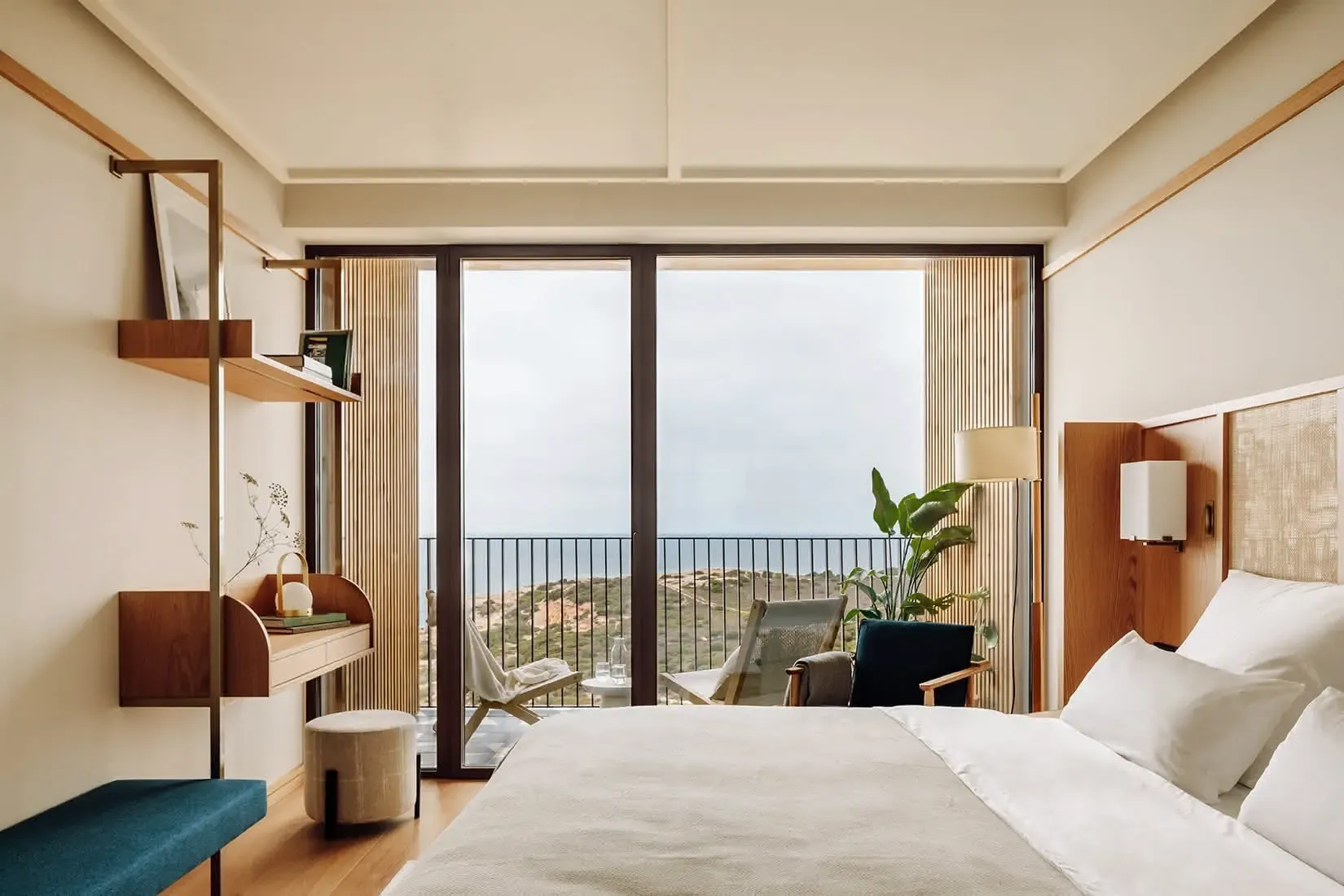
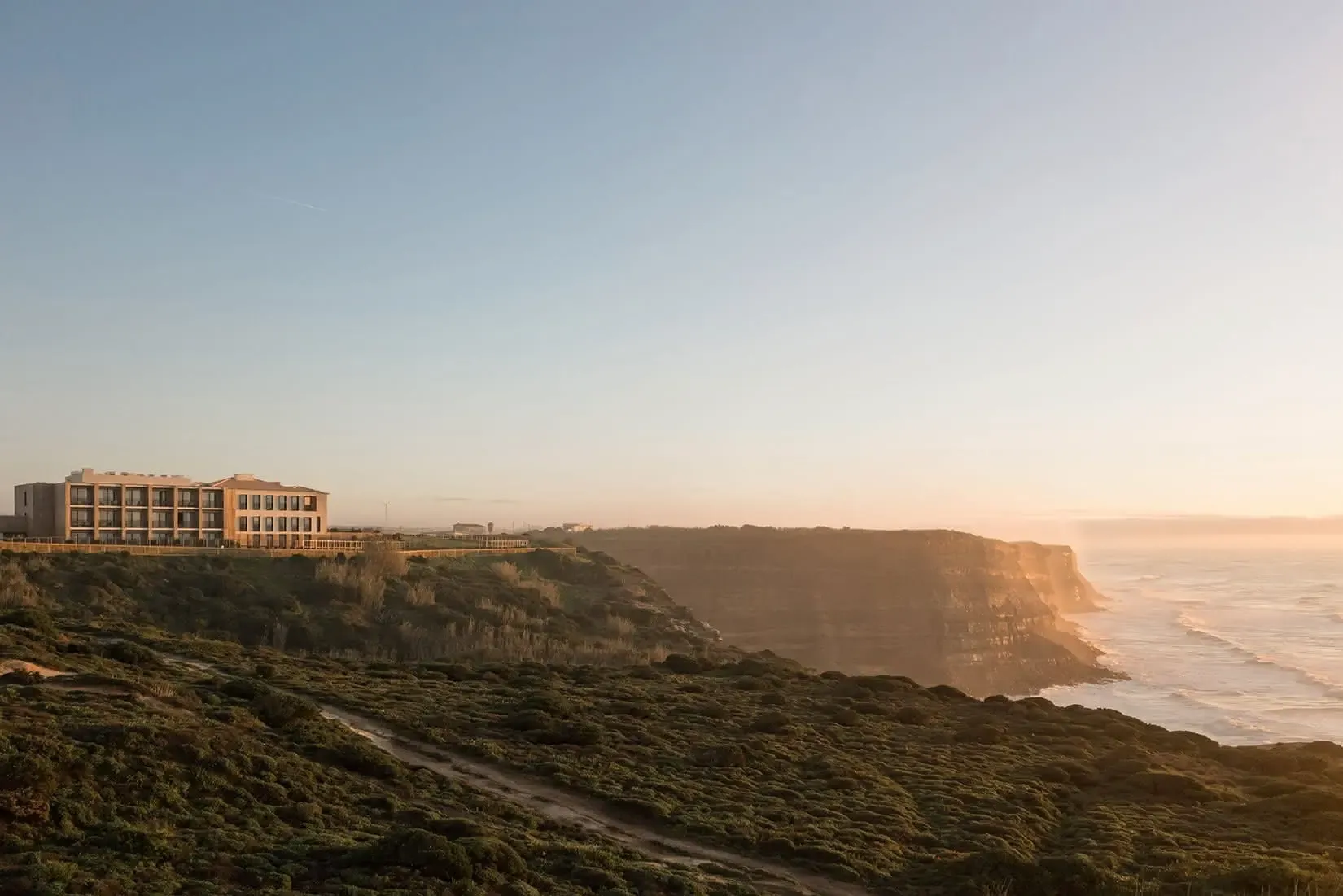
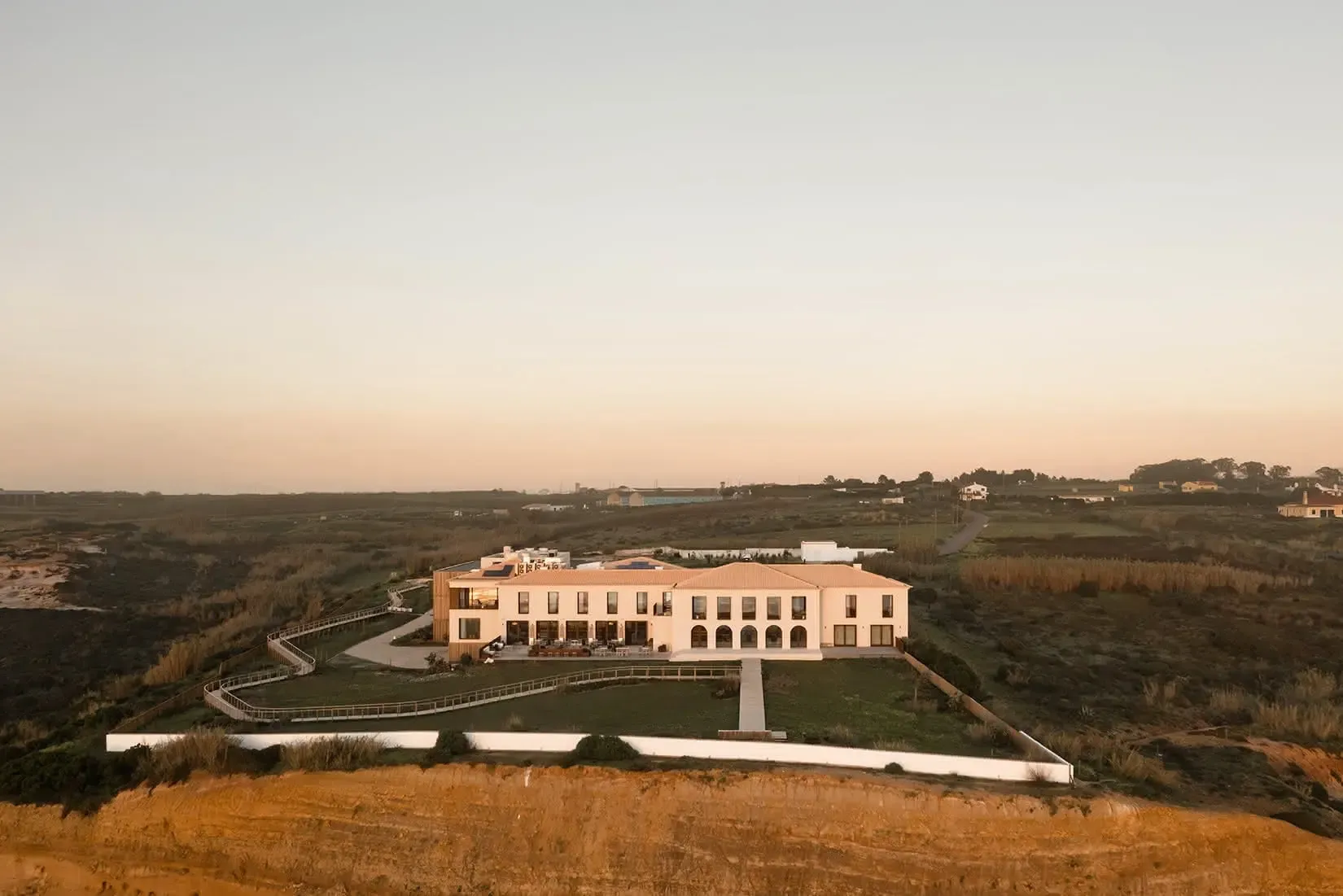
Aethos Ericeira is a boutique hotel located near Calada beach, in Ericeira, a growing tourist destination known for its amazing waves and the surf culture it welcomes. Once a fully equipped hotel, which has since been abandoned, and now with the application of an existing traditional inn, the unique location on the edge of a cliff and the stunning surrounding views placed some limitations on the intervention in order to preserve the delicate environment and comply with strict local building regulations.
The challenge was clear: how to reimagine such a complex building with the minimum intervention possible?
In a situation like this, where we are faced with an existing building that needs to be reinterpreted, we start by looking at what works well and identifying the problems that need to be solved. It was critical and methodical thinking that allowed us to creatively maintain the traditional features of the building, giving it new life and a fresh start.
In this case, the original building got a little lost in the midst of several subsequent extensions, with different architectural languages and a confusing combination of traditional and modern elements.
We believed that the solution would be to establish a clear distinction between the old and the new, by restoring the existing building to something closer to its original state.
This would allow the expansion and the new structure to have a distinct character, while respecting the overall aesthetic coherence.
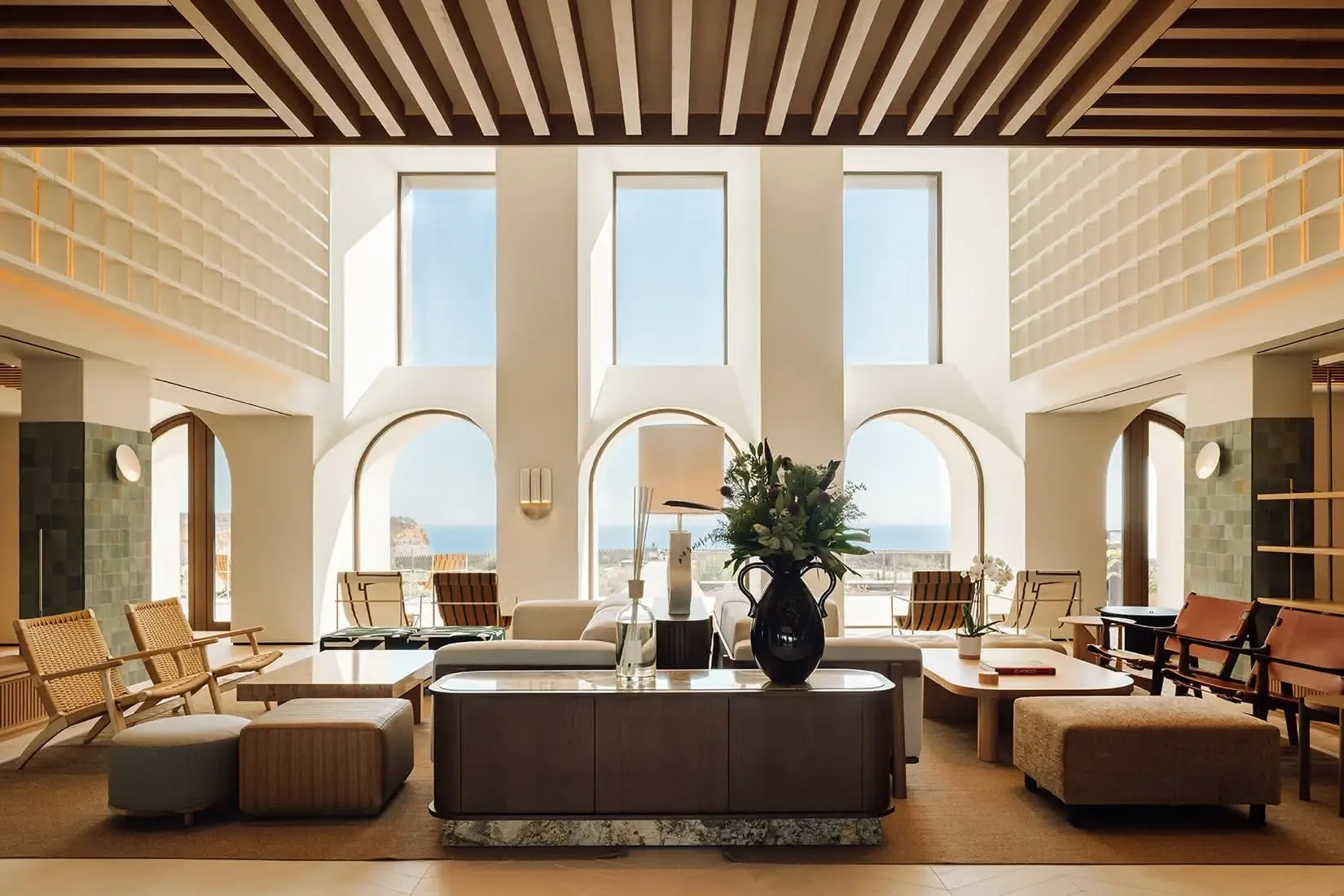
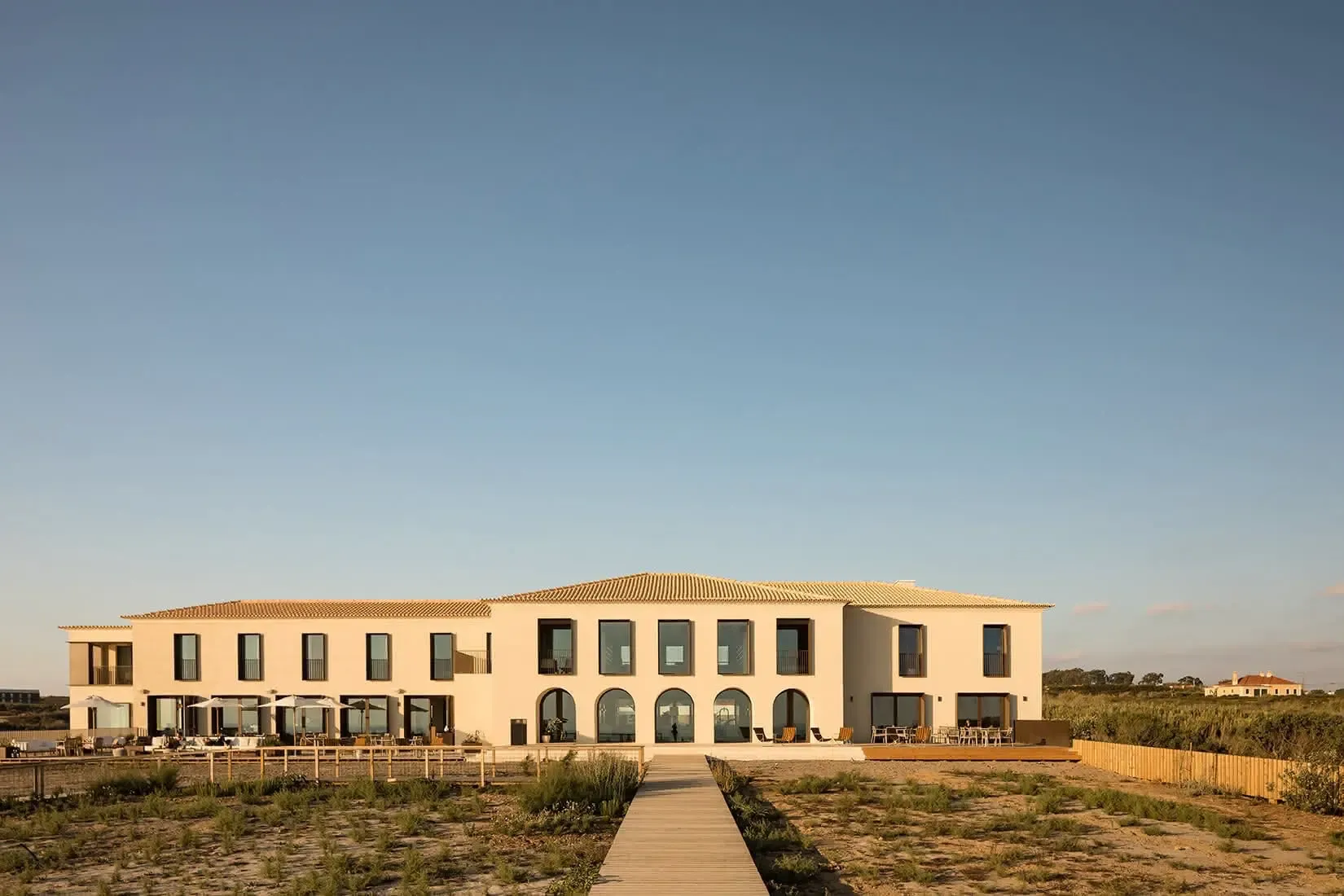
With this in mind, we began by identifying the parts of the existing building which still retained their original identity, as opposed to those that felt more ambiguously contemporary. For example, in these areas of more traditional construction, we felt it was crucial to preserve the character of the original building.
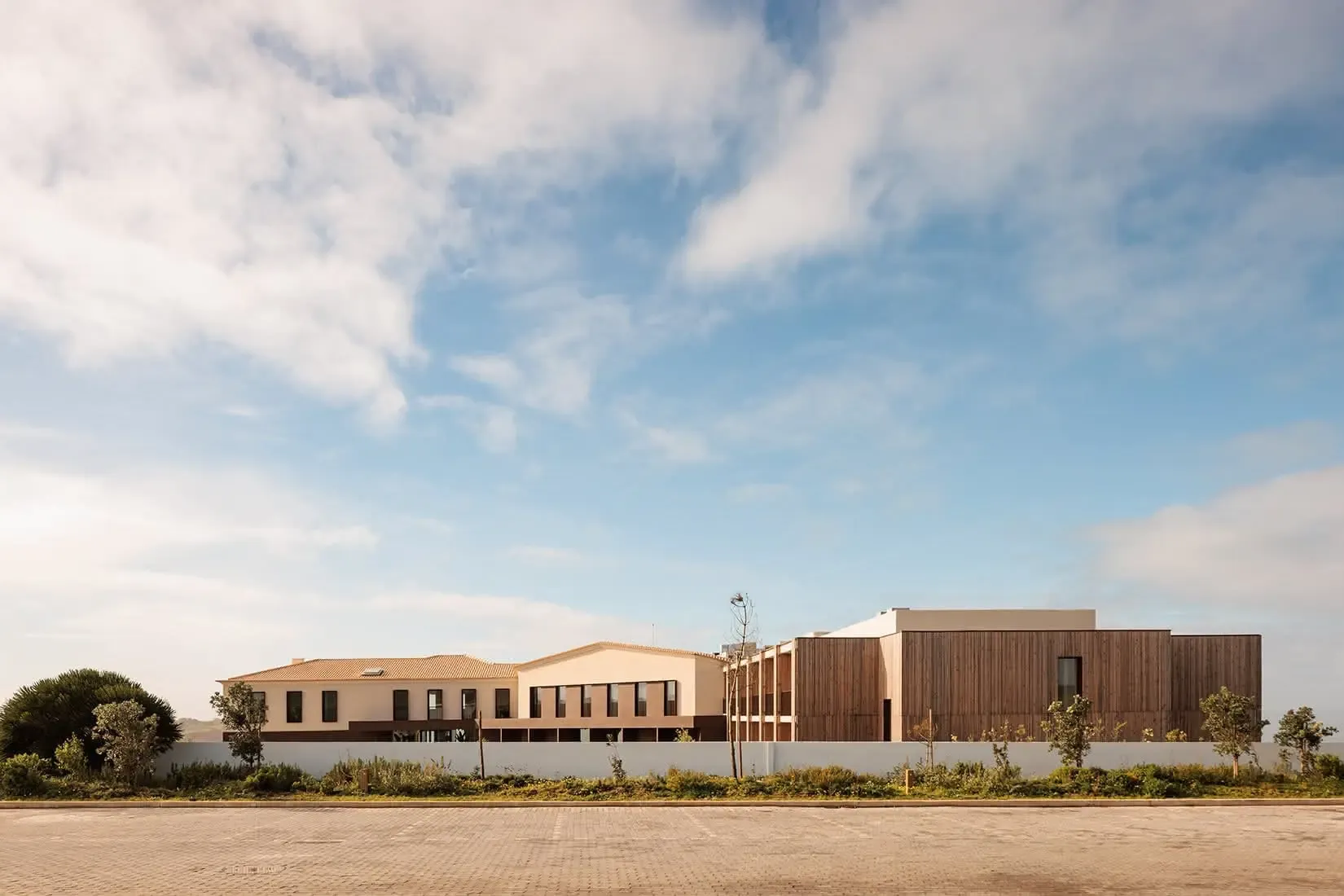
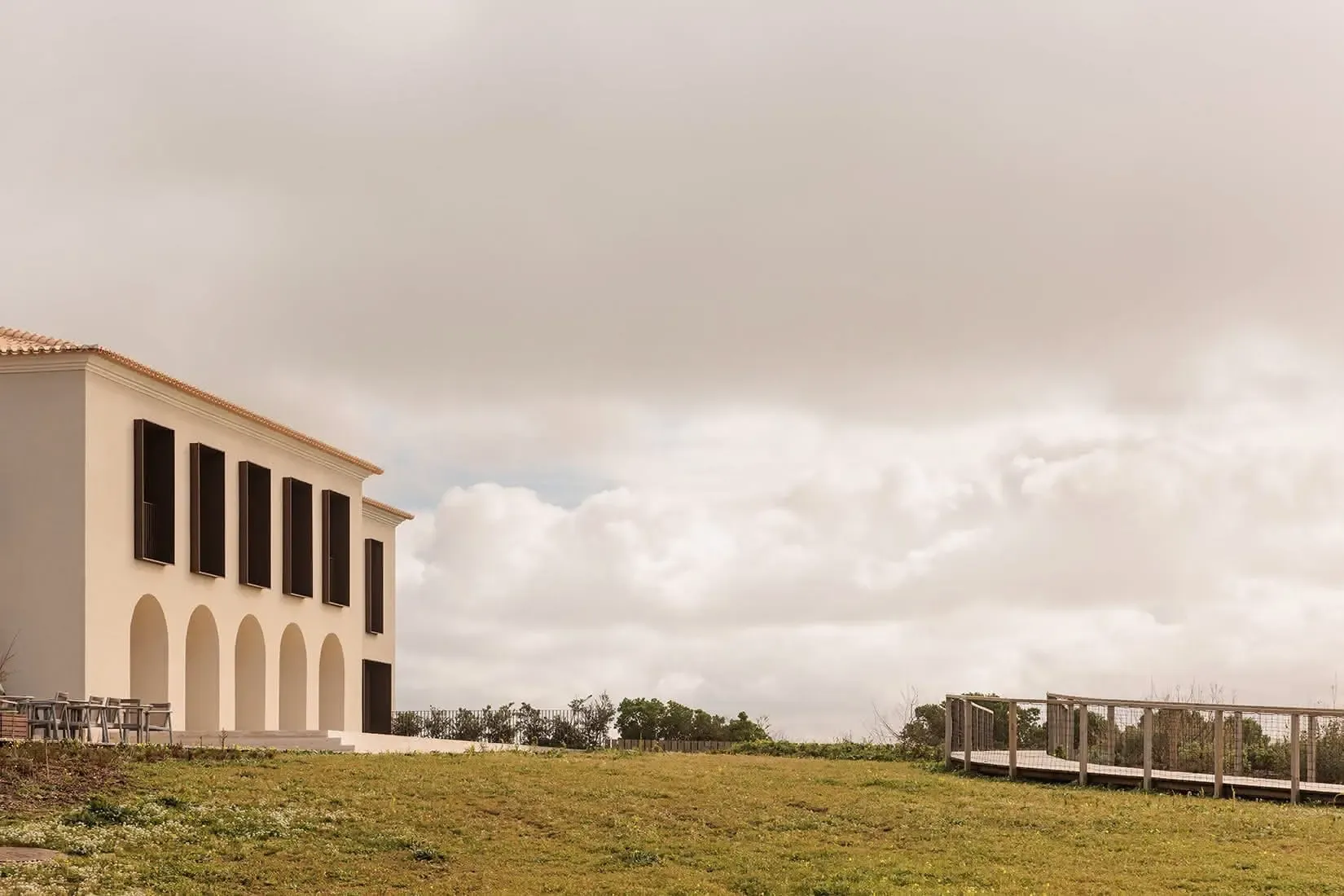
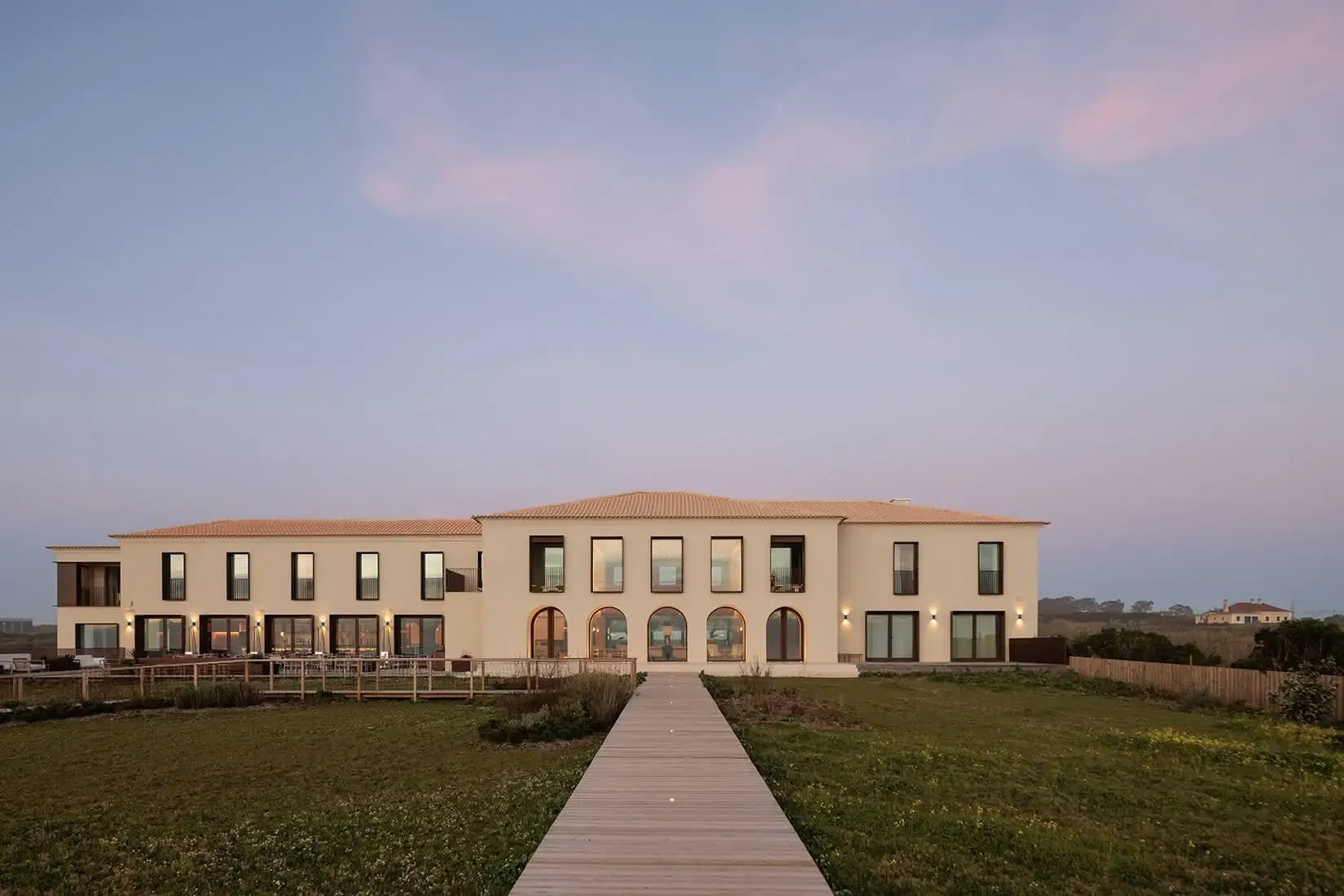
Here, several more recent additions and decorative elements were removed to restore and emphasize the original volume, with its thick outer walls and sloped roof, which we identified as its most fundamental features.
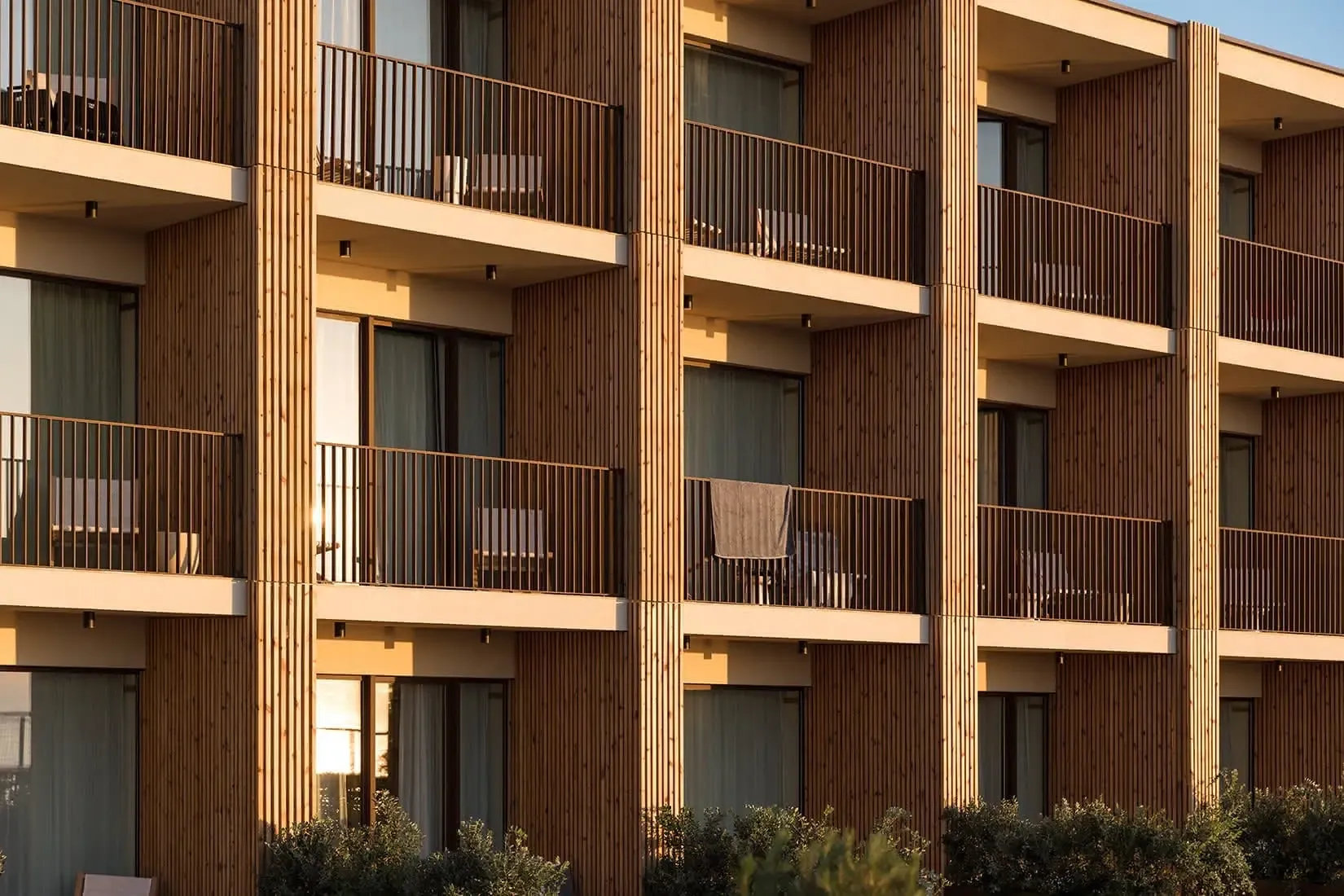
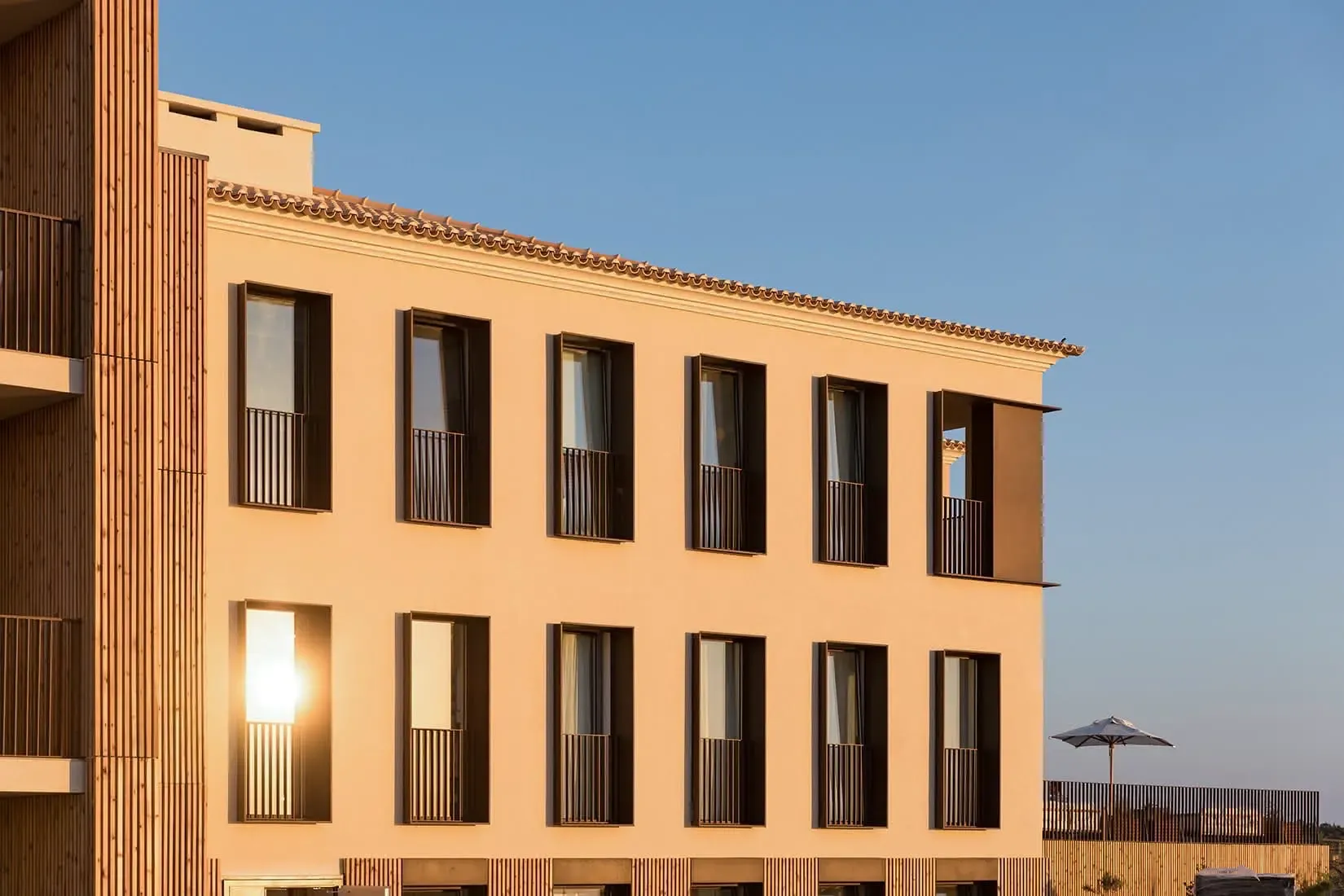
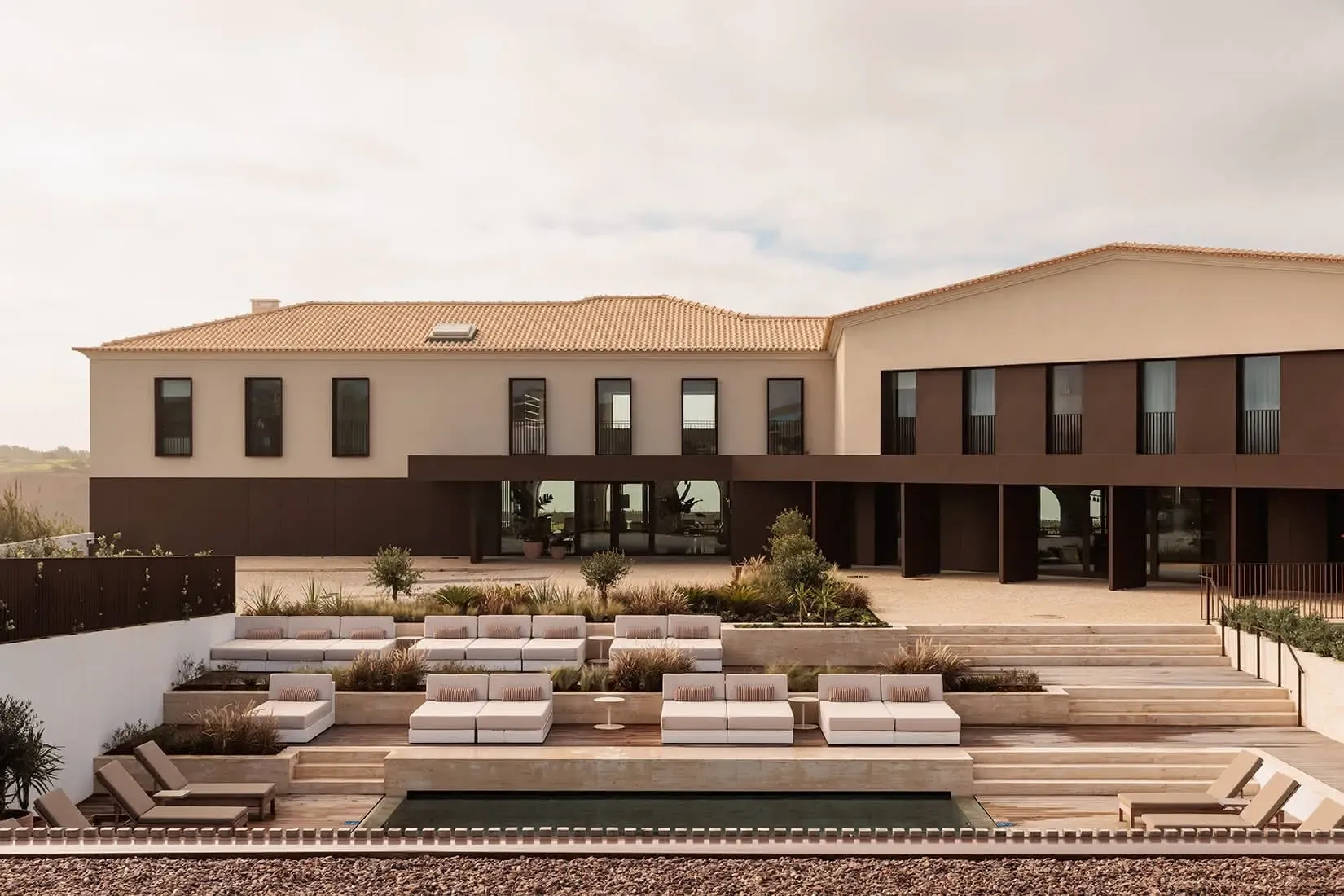
The existing building had the white painted walls and roof tiles that are traditional to this location, and in these areas, which we tried to emphasize as pre-existing, these materials were preserved. However, we replaced the stark white paint with a more muted off-white thermal screed for both technical and aesthetic reasons, highlighting the sense of weight that characterizes this type of traditional construction.
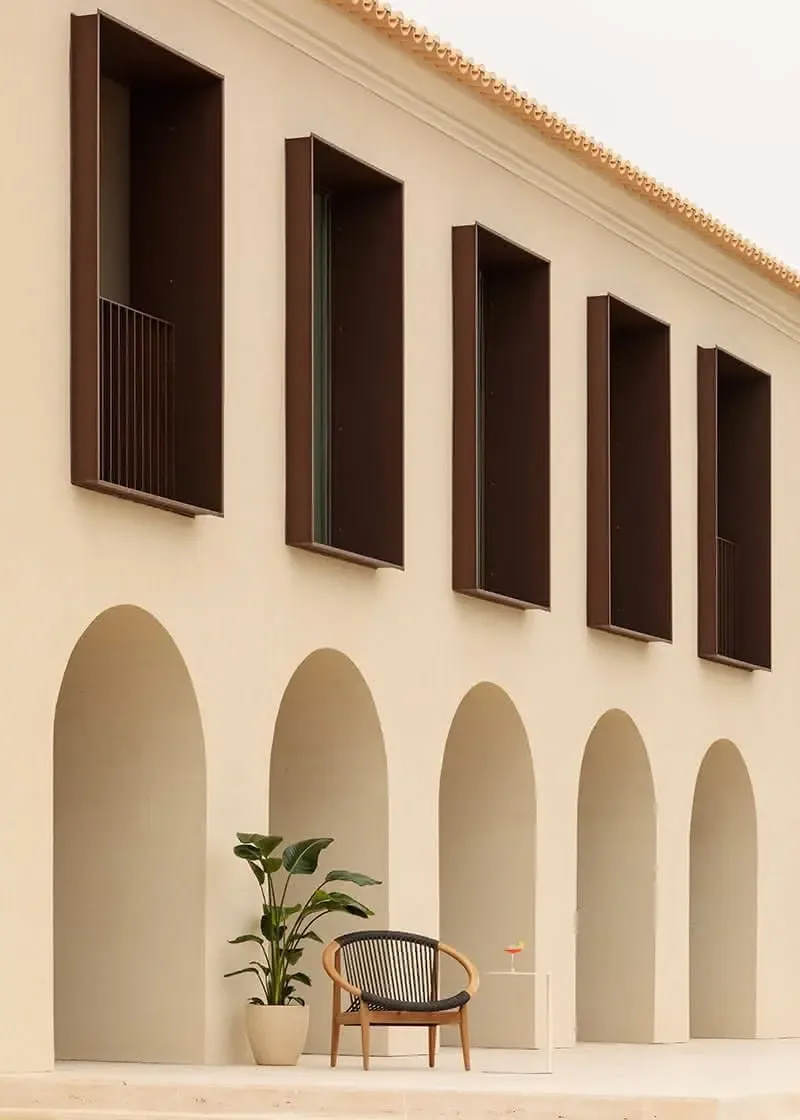
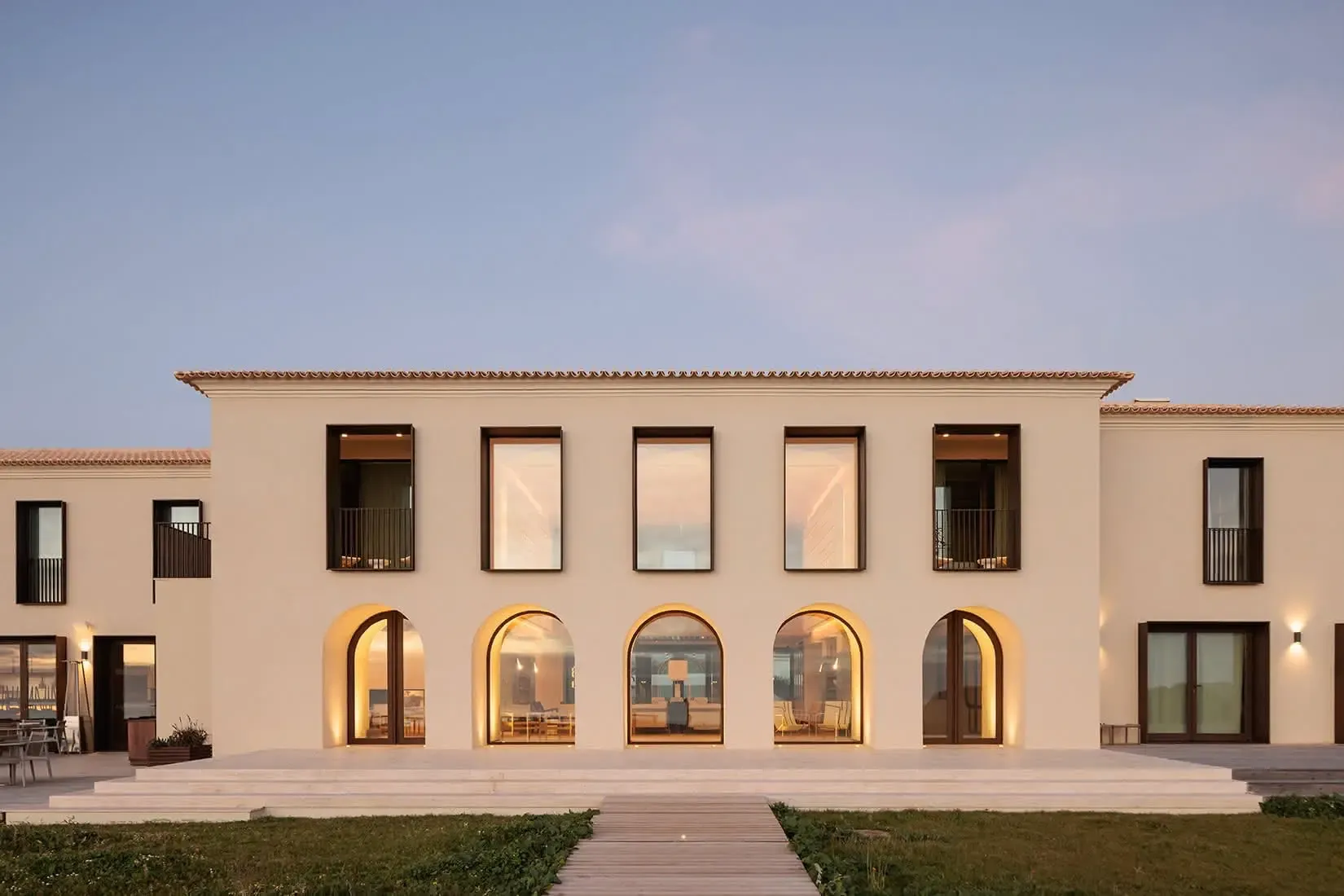
A crucial detail we wanted to preserve was the deep archways in what is currently the lobby, which ended up becoming a defining characteristic of the space, highlighting the solid traditional construction. Here, some superfluous detailing was removed, and the design was adapted to better suit the new double height lobby, maximizing the ocean views without sacrificing their sense of mass.
Another key moment was the definition of the concept behind the openings in these areas. Here, the new program called for larger windows to allow in light and take advantage of the amazing views, rather than the traditionally smaller facade openings, especially in the social and food & beverage areas. In keeping with our goal of clear distinction between old and new, we gave these windows their own contemporary visual identity and materiality, designing them as metallic ‘boxes’ protruding from the facades, which went on to becoming one of the building’s defining features.
For the areas of more recent construction the challenge was then to achieve a contemporary look and feel that was well integrated with both the existing building and the striking landscape surrounding it all with minimal intervention.
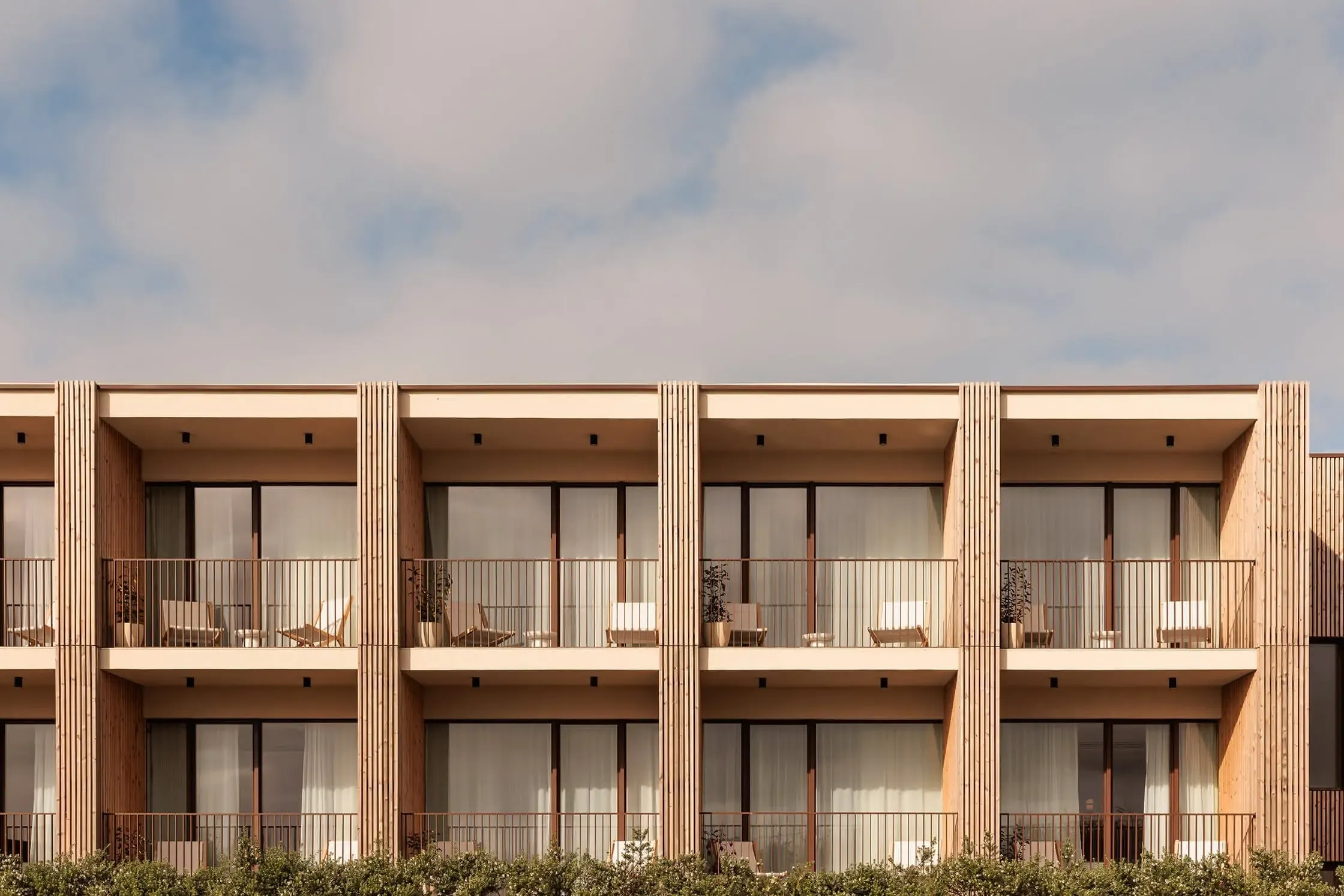
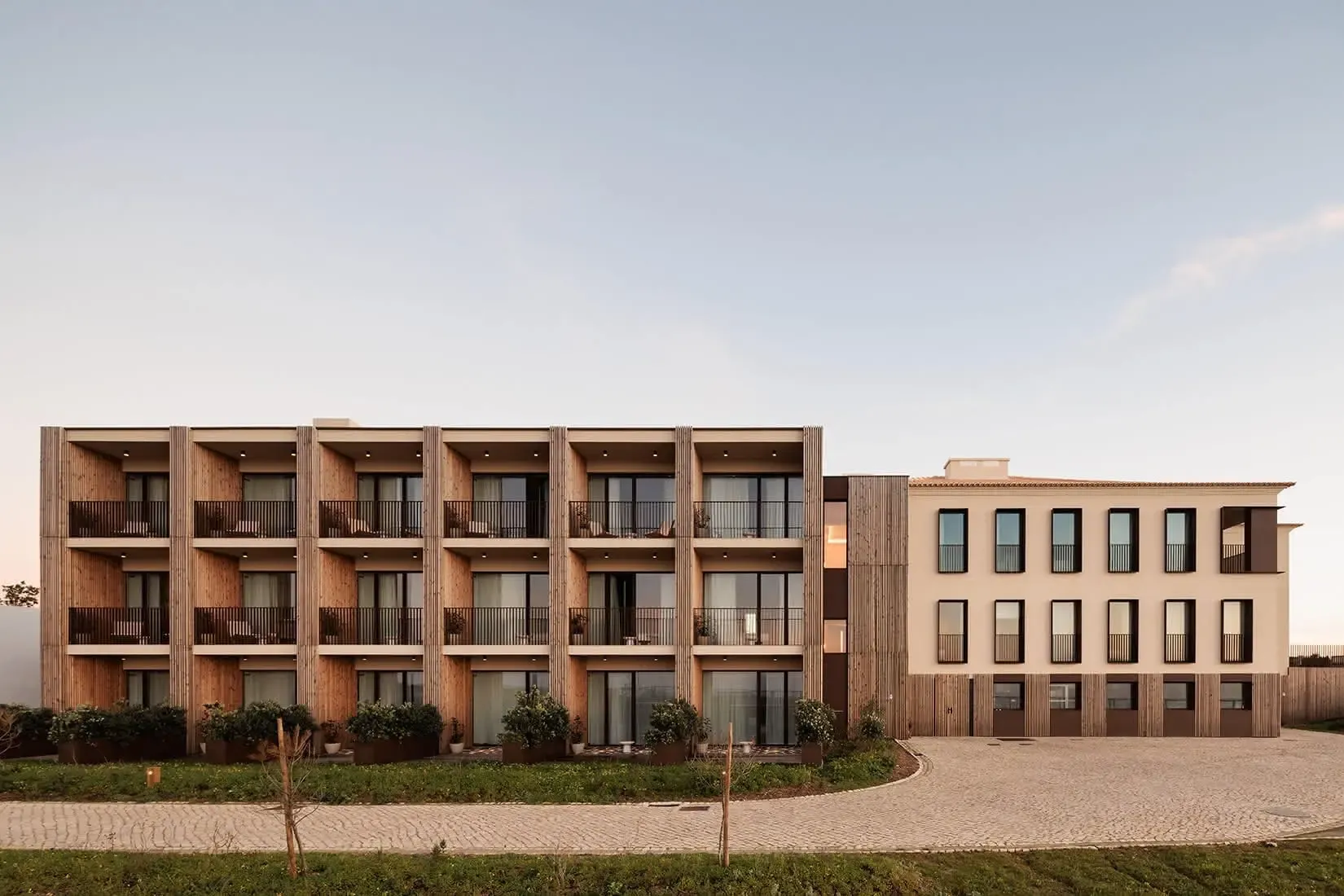
We achieved this by combining surgical instances of demolition (removing some certain sloped roofs, opening up the balconies, etc.) with a strong materiality that completely covers the facades, reinterpreting them into clearer shapes and volumes.
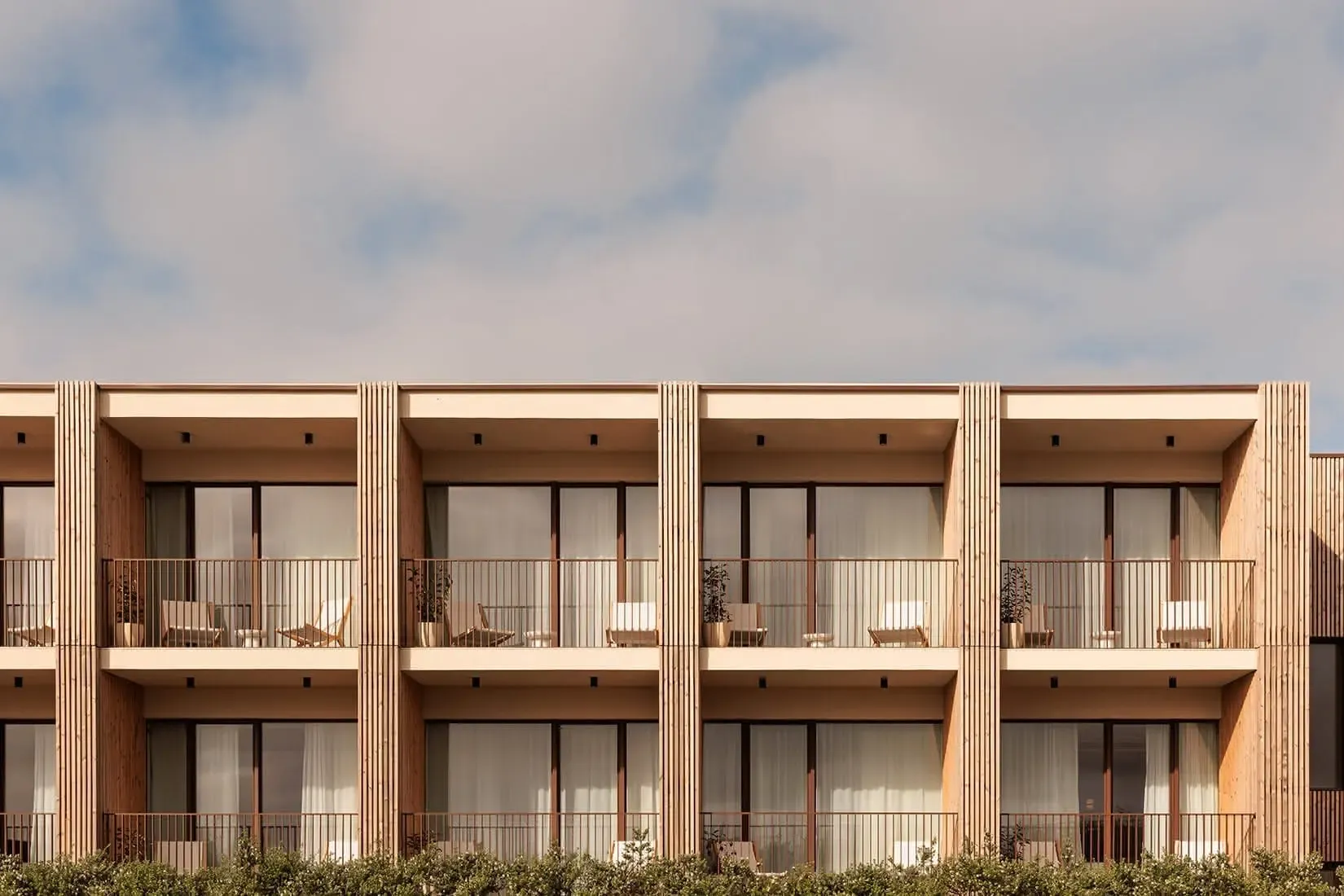
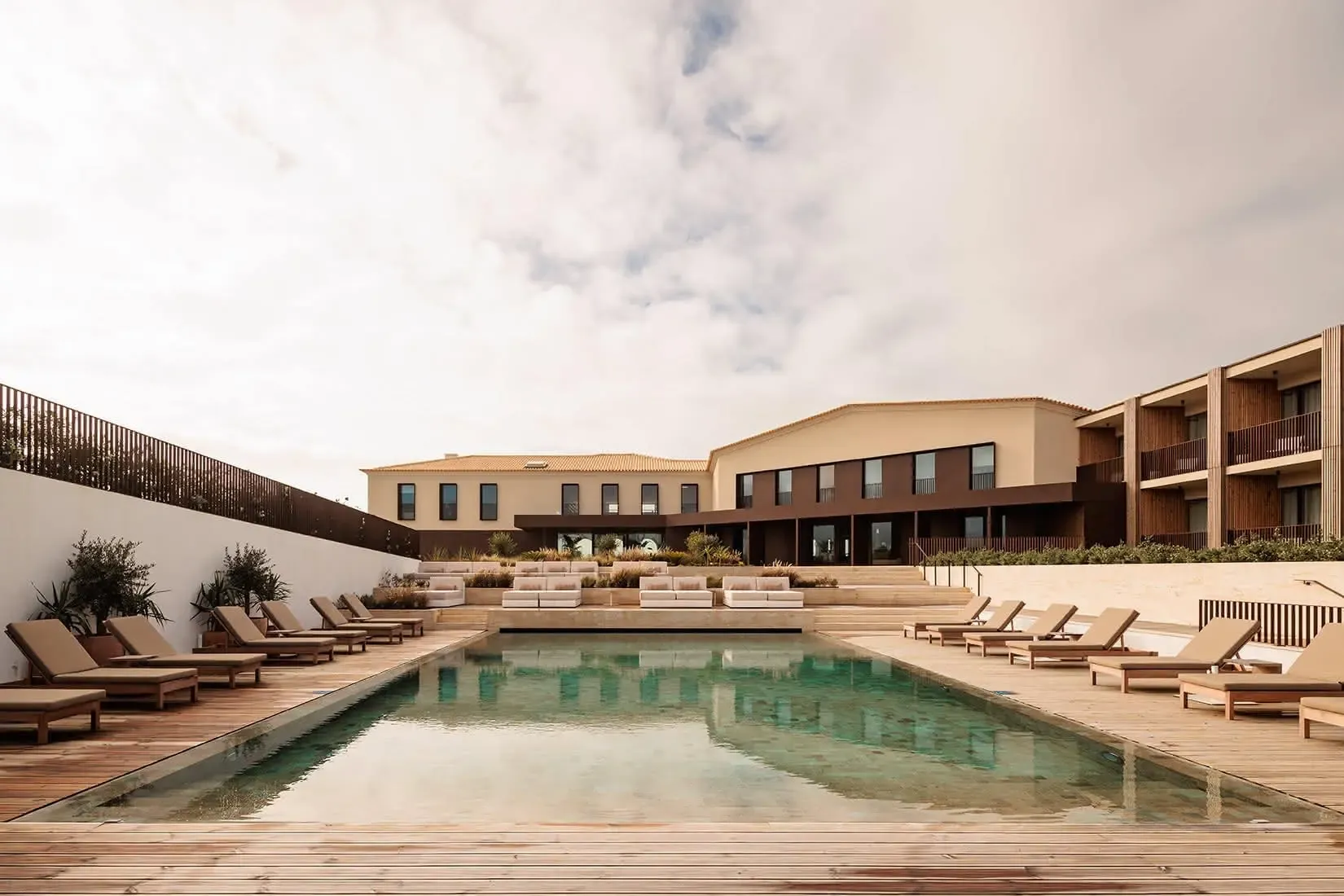
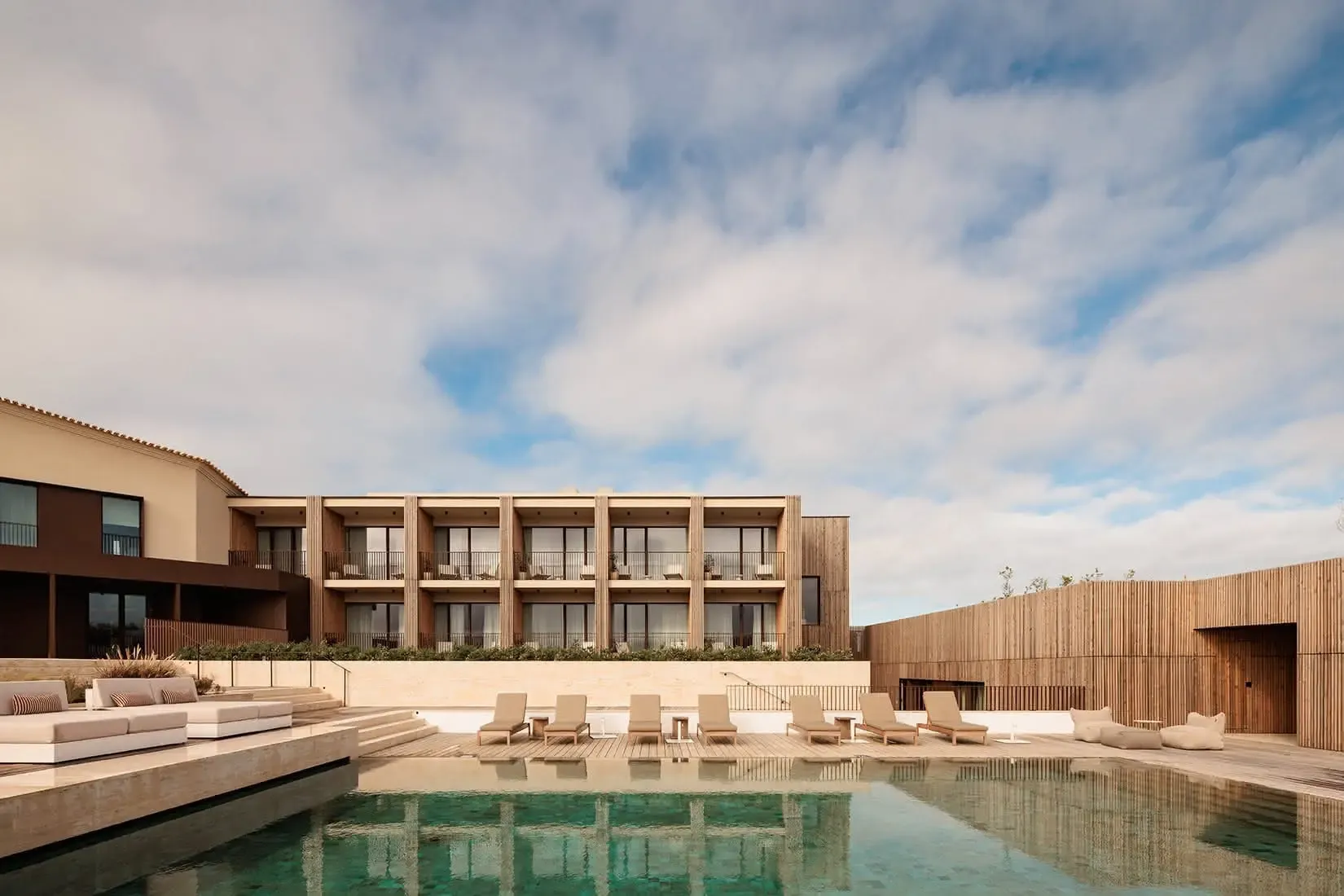
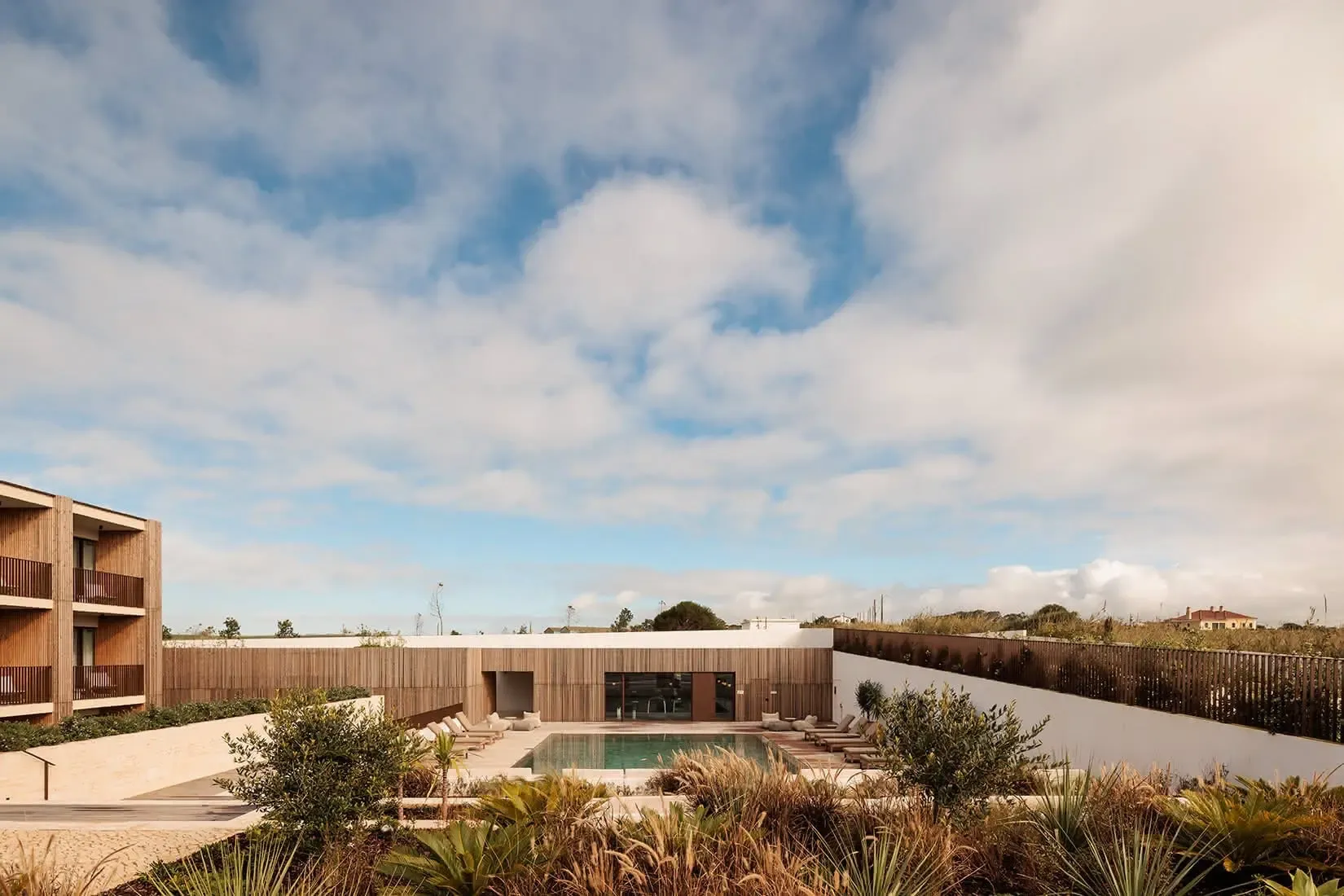
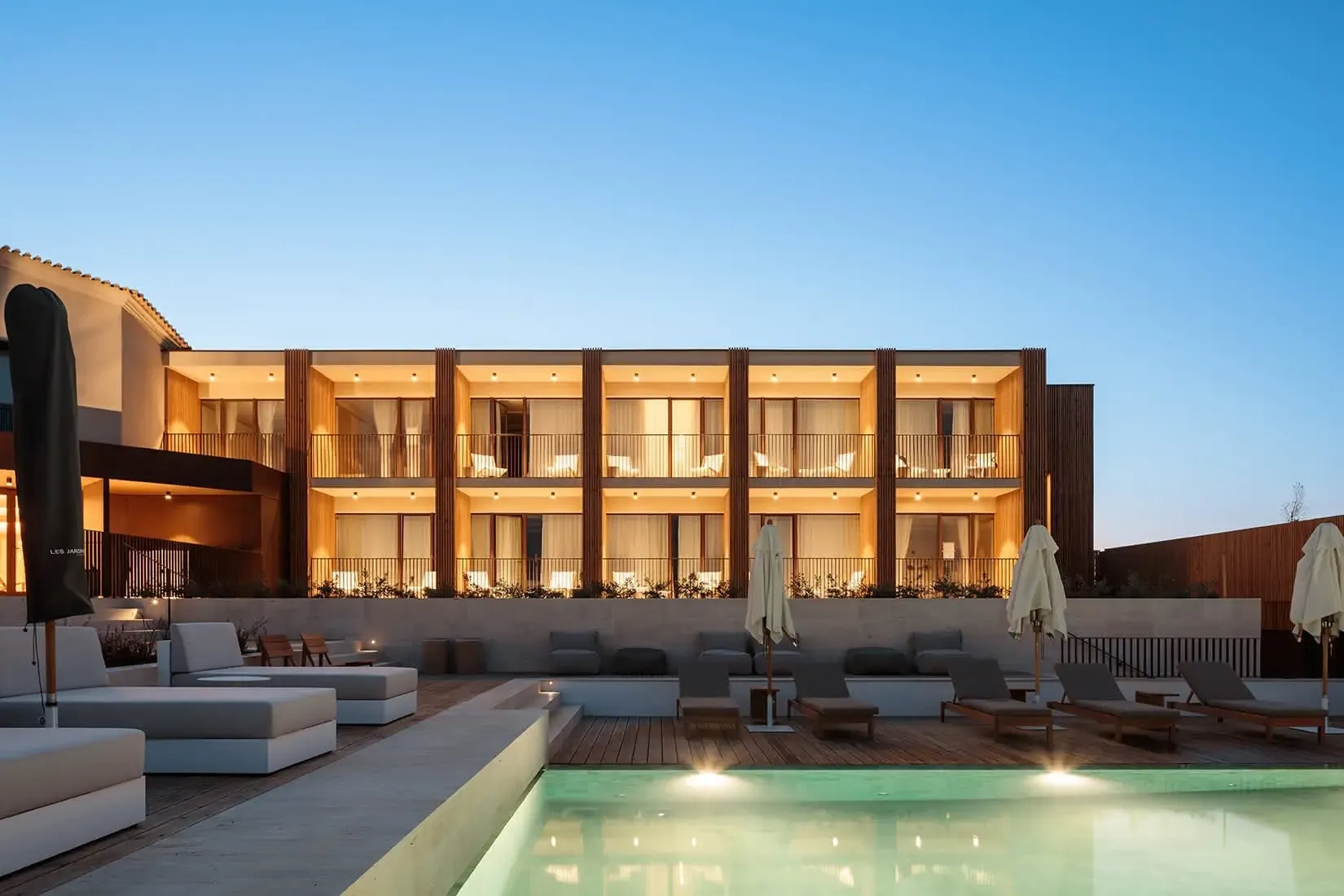
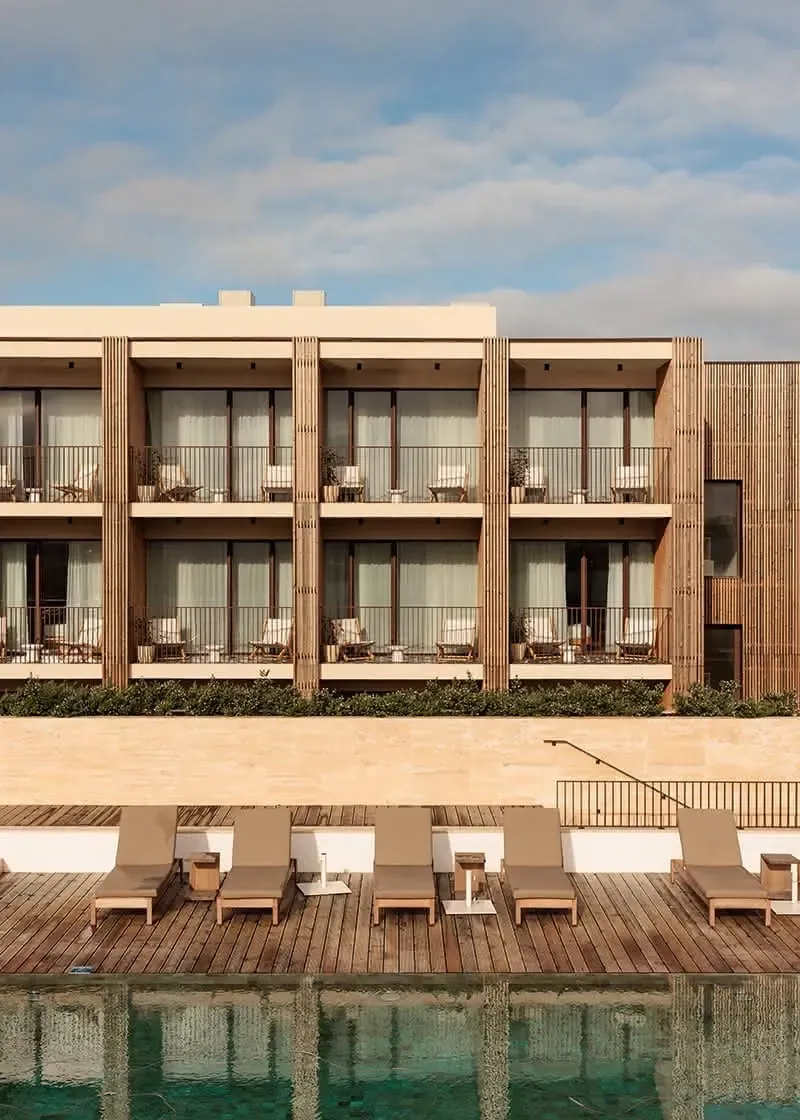
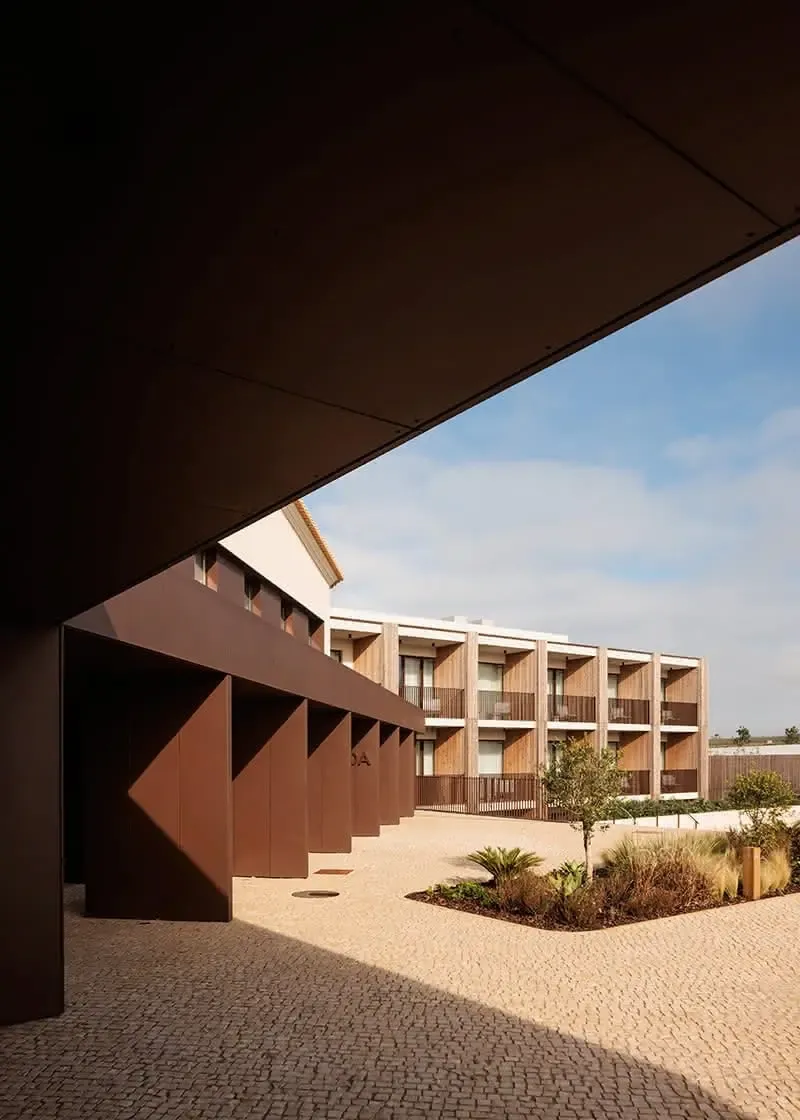
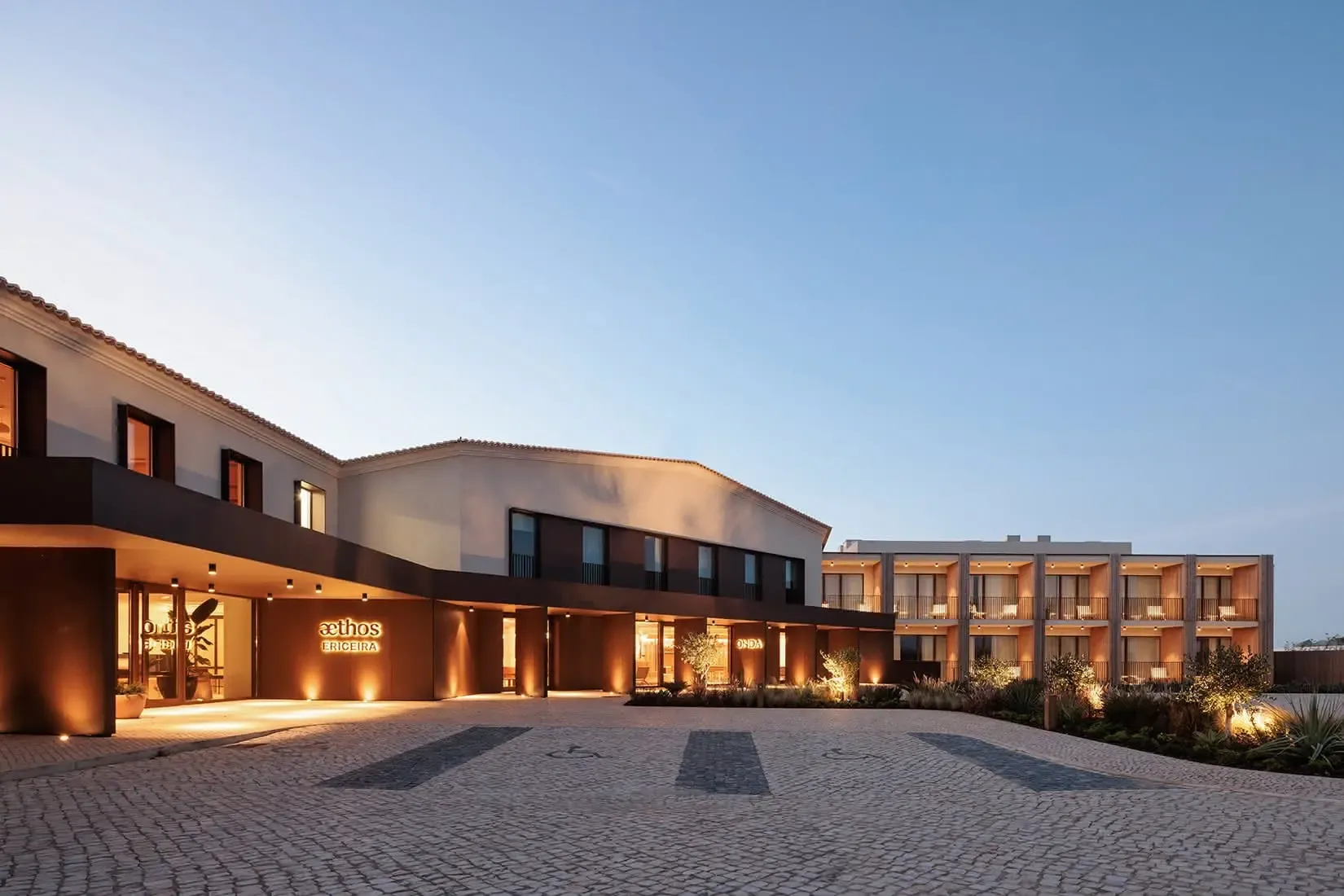
The obvious material of choice for this intervention was wood, which in this location will age fast but gracefully, picking up the tones of the surrounding environment. The final pieces were the metallic elements, painted in a matt dark brown colour, offering a light contrast to the wood, as well as a much more pronounced contrast with the white walls, both in colour and in the lightness of their construction, securing their identity as part of the new intervention.
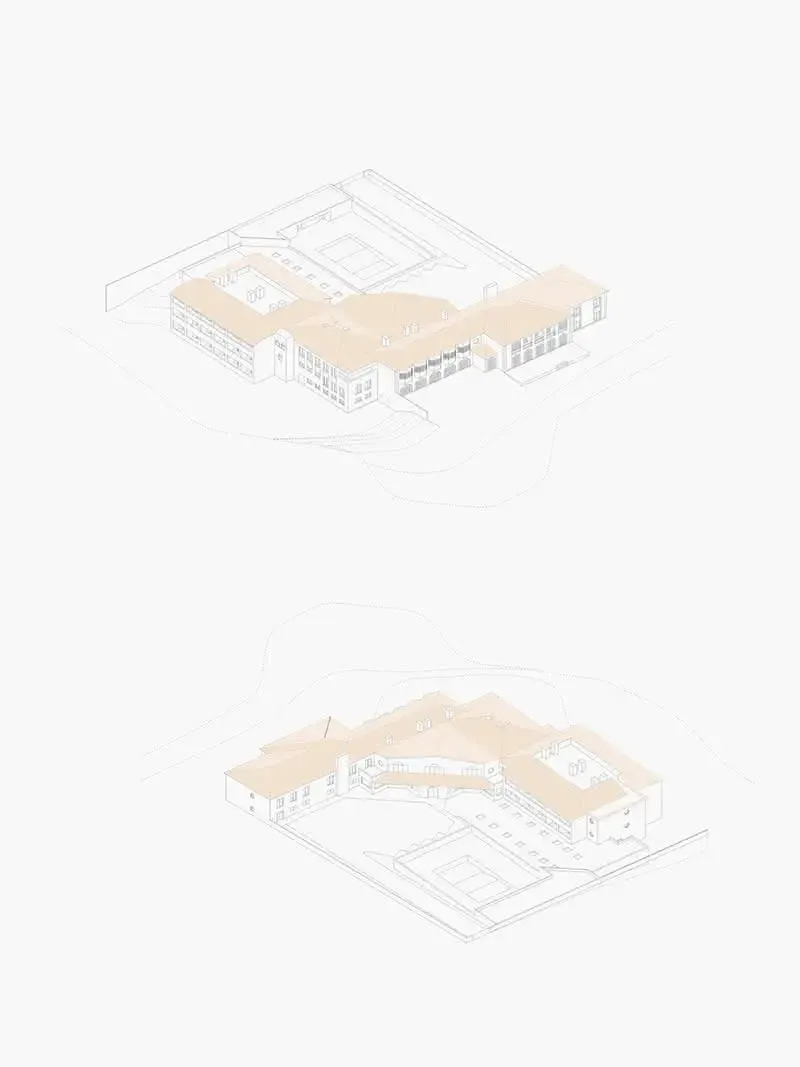
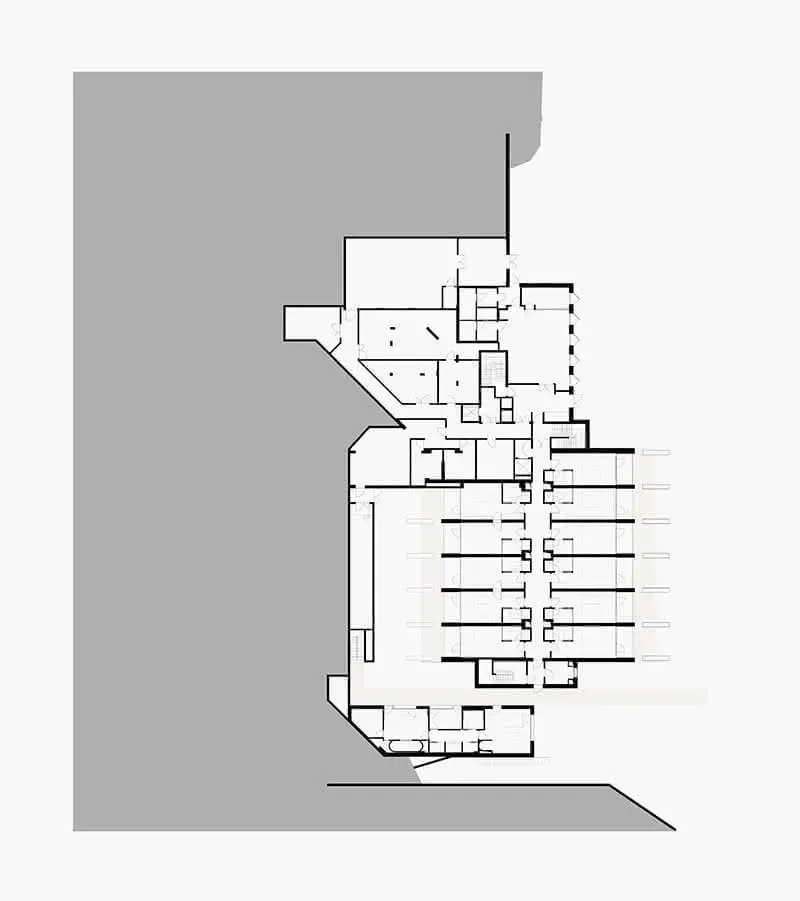
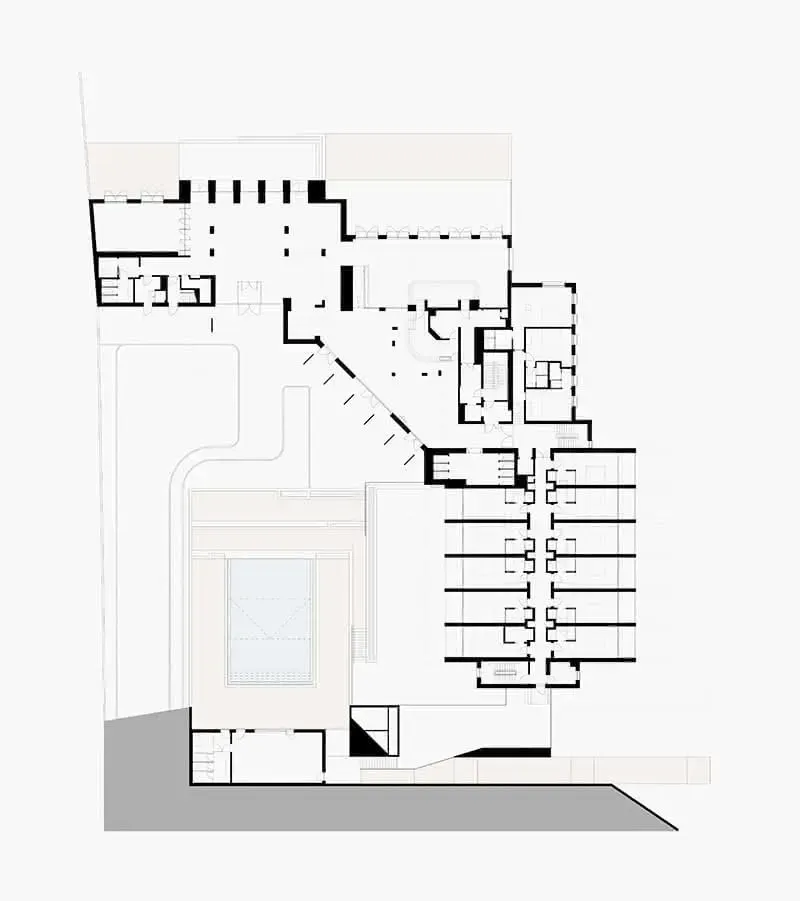
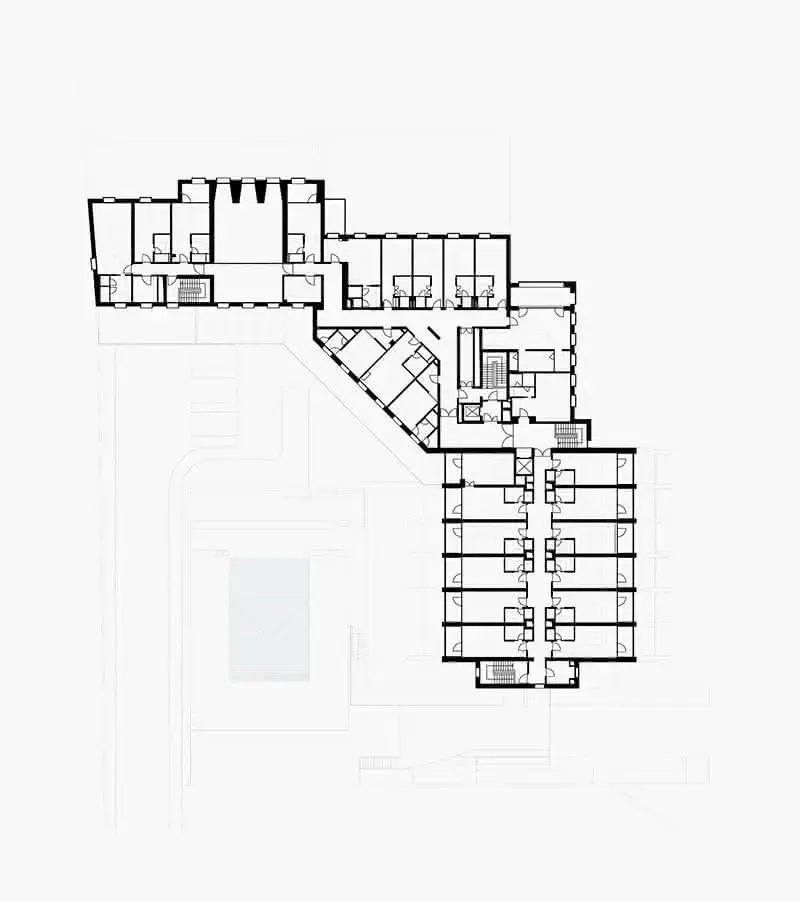
Since the existing building had a very similar program to the current intended use, its overall organization was largely maintained. The original building and an initial expansion form a 2-story wing, with common areas on the ground floor and rooms on the first floor, as well as a partial basement which houses most back of house areas. These were complemented by a more recent 3-story wing dedicated entirely to guestrooms, as well as a separate bar building close to the pool, which we adapted into a gym.
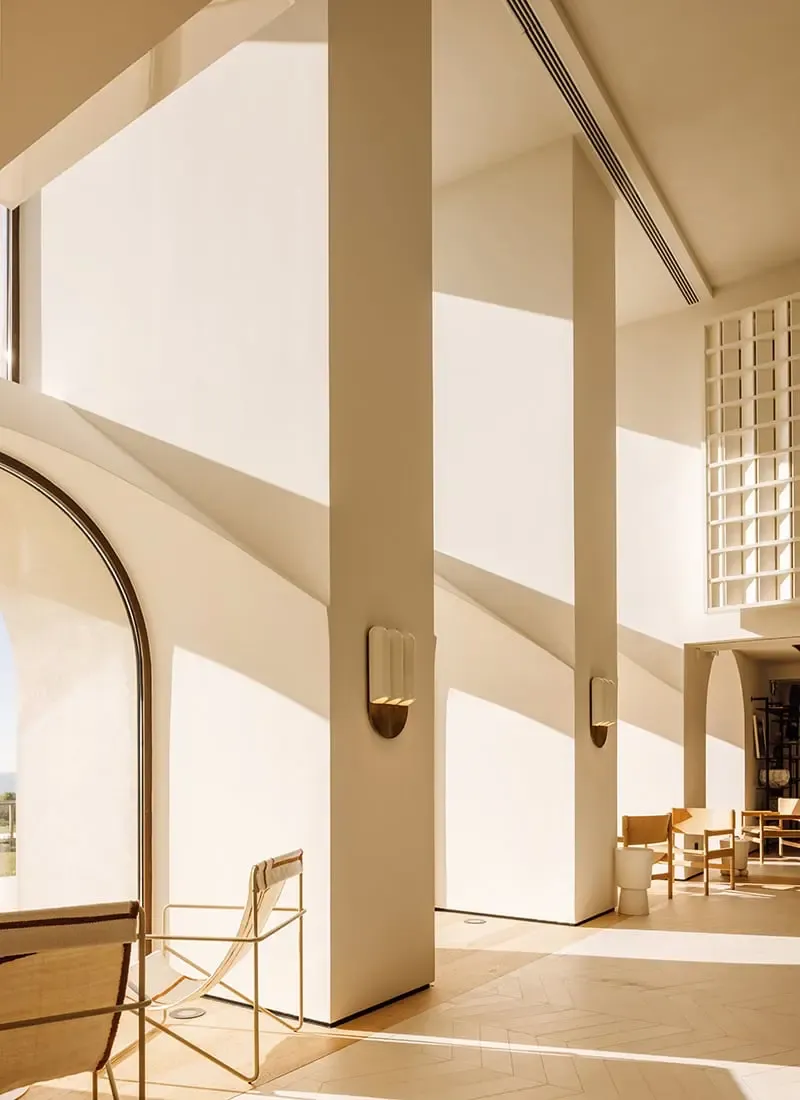
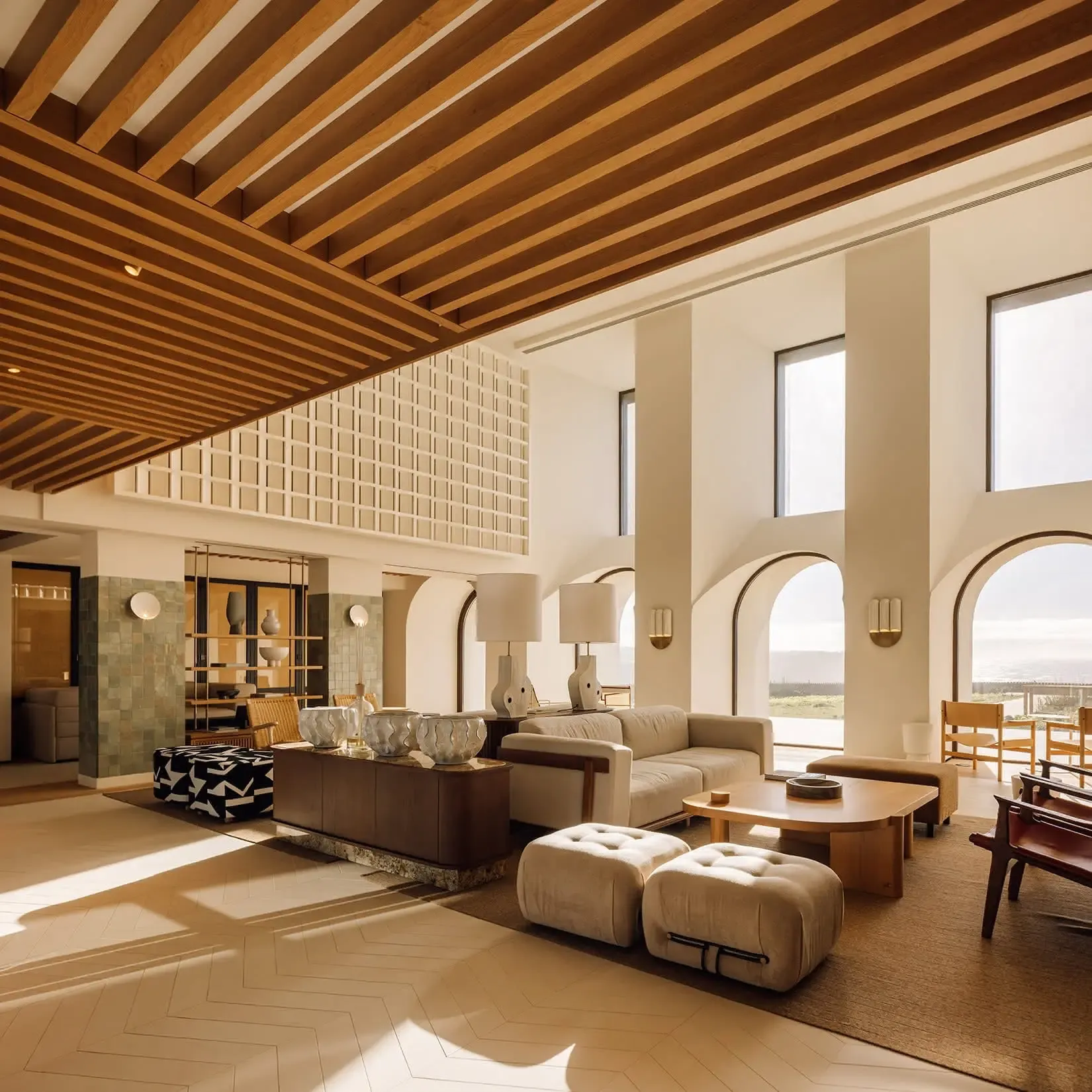
Although the existing building was close to being serviceable as a hotel at the time of completion, almost all rooms had to be slightly altered to meet current standards and the level of service intended, and circulations had to be adjusted and improved after several progressive extensions had left them somewhat convoluted.
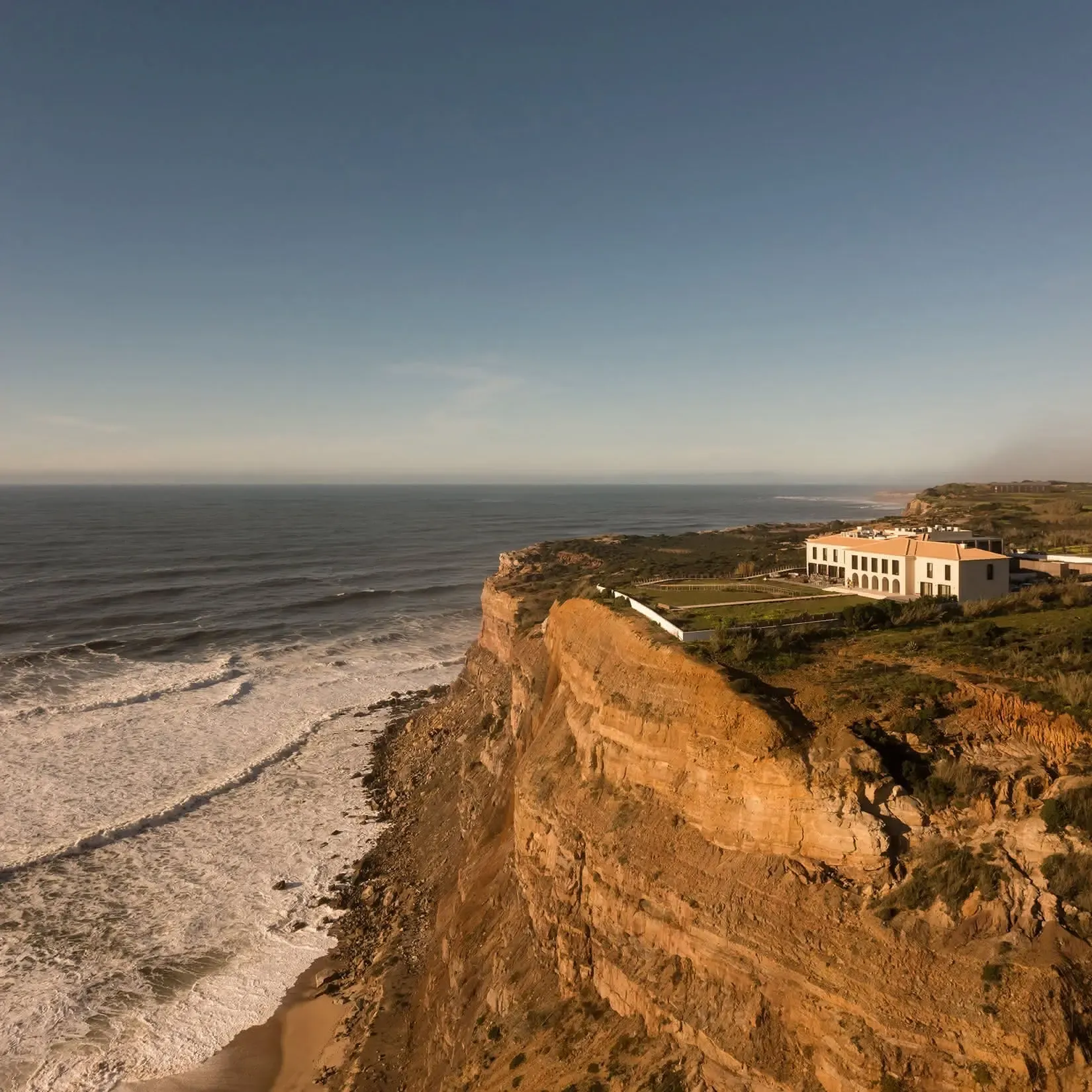
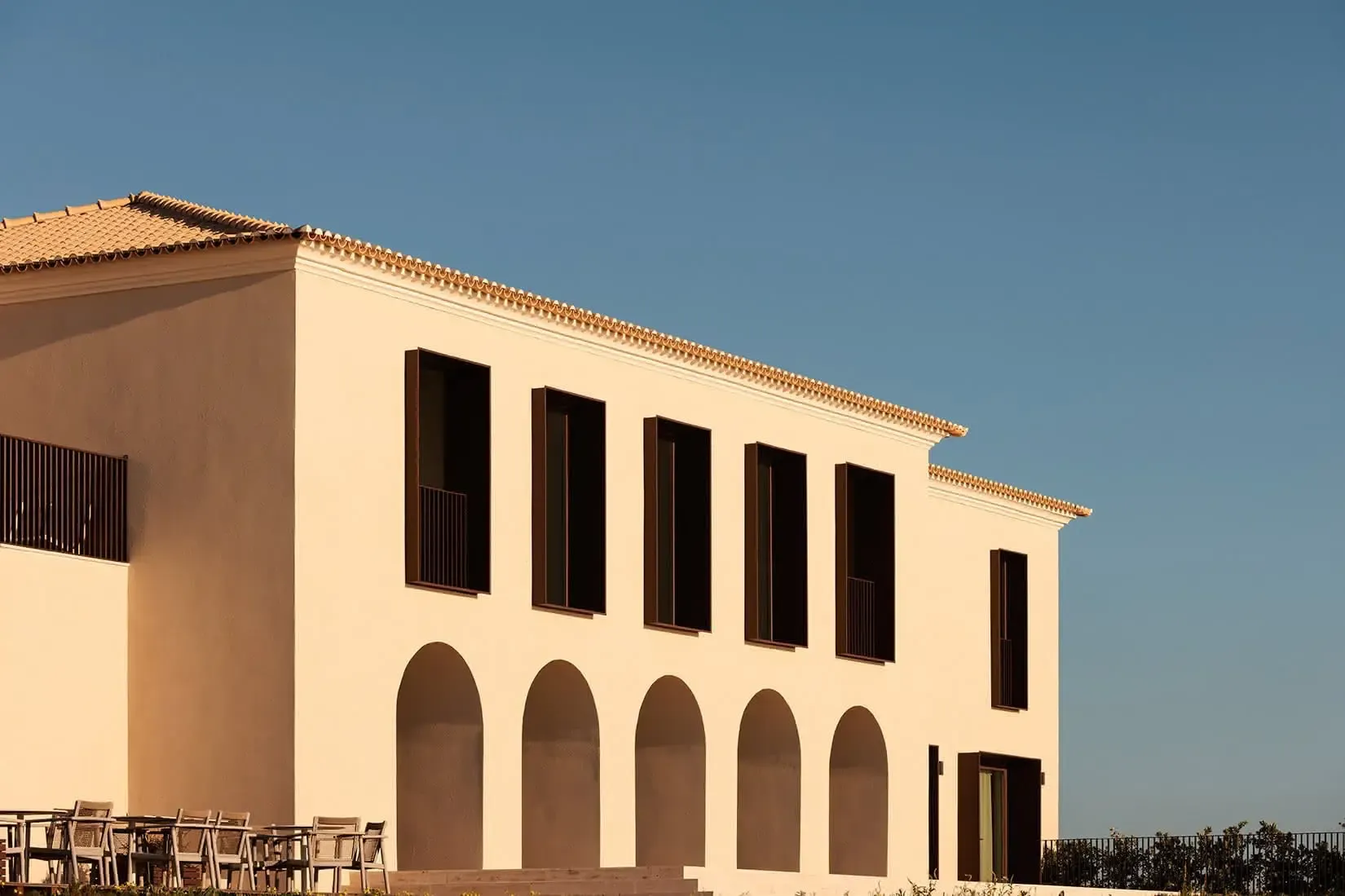
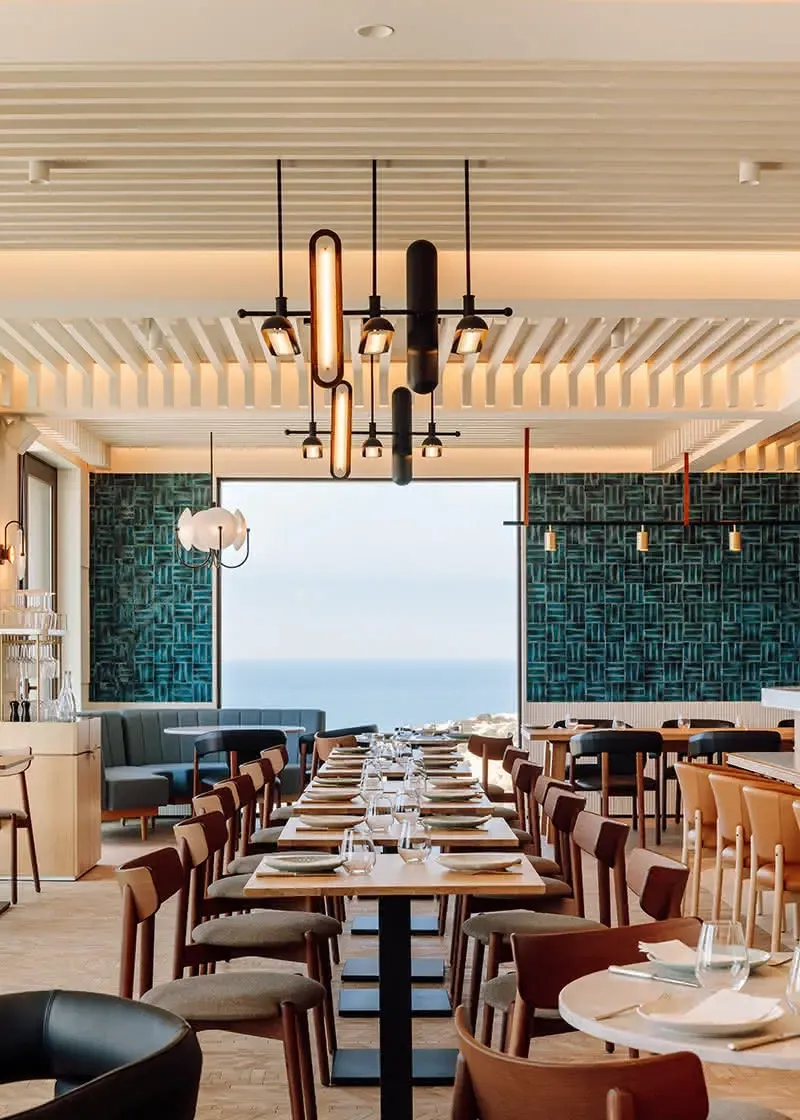
One of the bigger changes to the layout was to the Bar, Restaurant, and social areas, where we tried to balance the ‘heavier’ traditional construction style of the existing building with the more open-plan style ambiance that the program called for, while also significantly improving the views and connections with the outside areas.
The Restaurant in particular takes much better advantage of its prime location with both an ample outdoor seating area and large new windows framing the amazing seascape.
These updates to the interior layouts were developed in collaboration with Barcelona based Astet Studio, who were responsible for the Interior Design and FF&E of the Hotel.
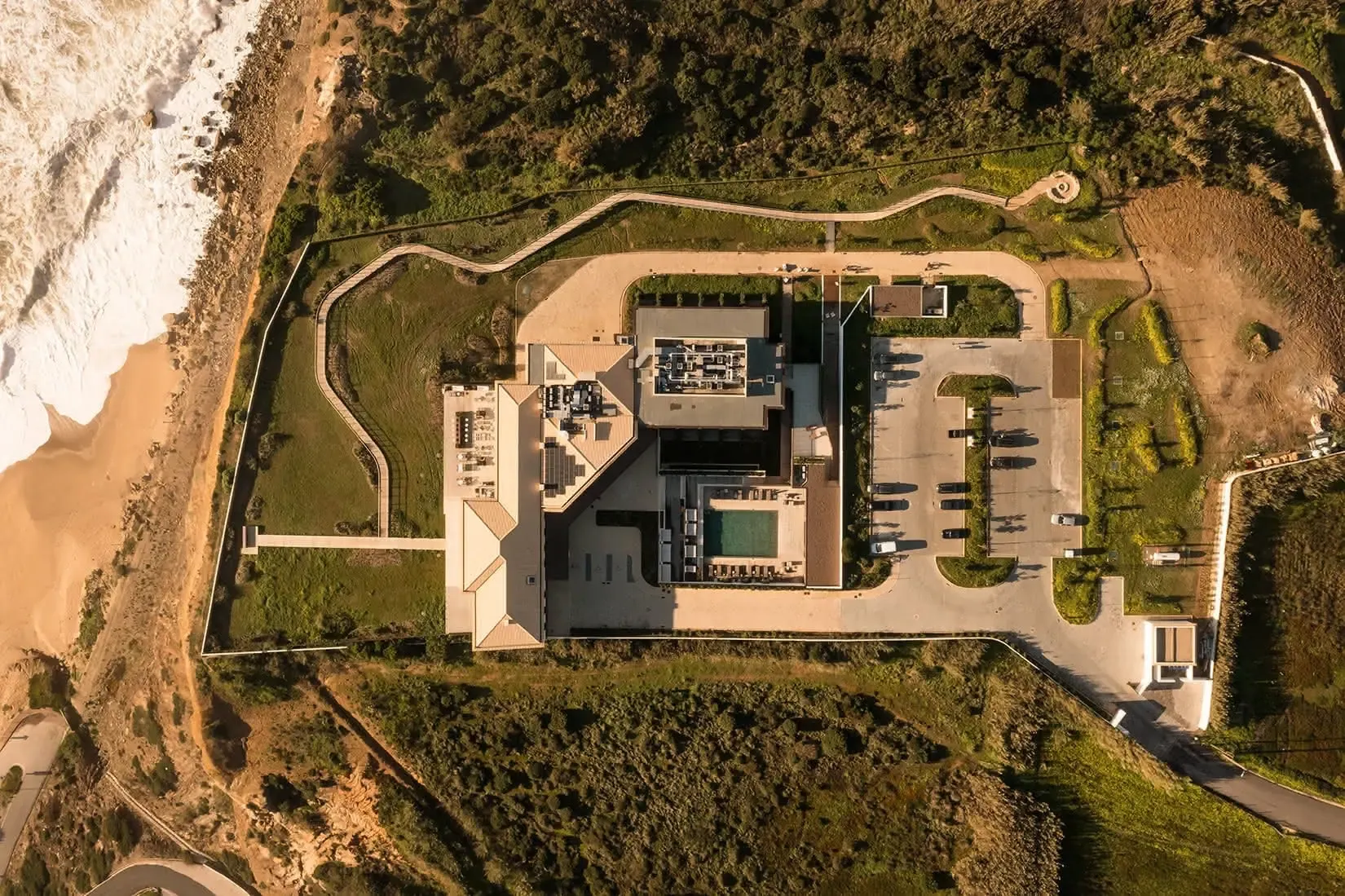
On the exterior, one of the more dramatic changes to the existing complex was the near total demolition of an existing basement on the edge of the pool area, containing a complete and seldom used underground multipurpose room, part of which was later adapted into the spa building.
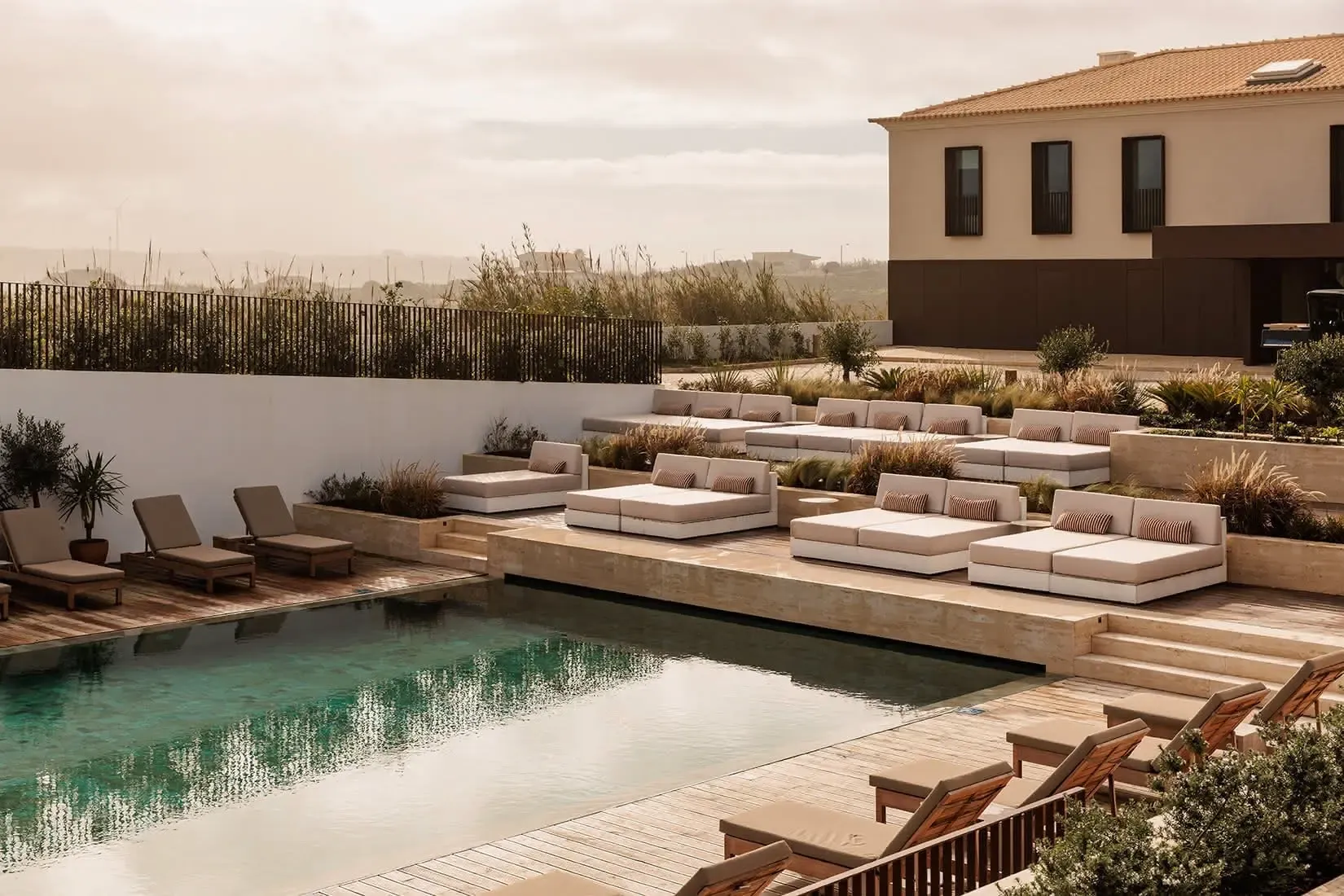
Although this reduced the overall built area, this demolition allowed for a more open connection between the pool, which had previously been surrounded by high walls on all sides, and the hotel building, paving the way for the reimagining of the pool’s surroundings into a more natural and inviting series of interconnected levels, while simultaneously creating an internal garden which allowed for the introduction of additional rooms and the spa into areas which were previously devoid of both natural light and views to the outside.
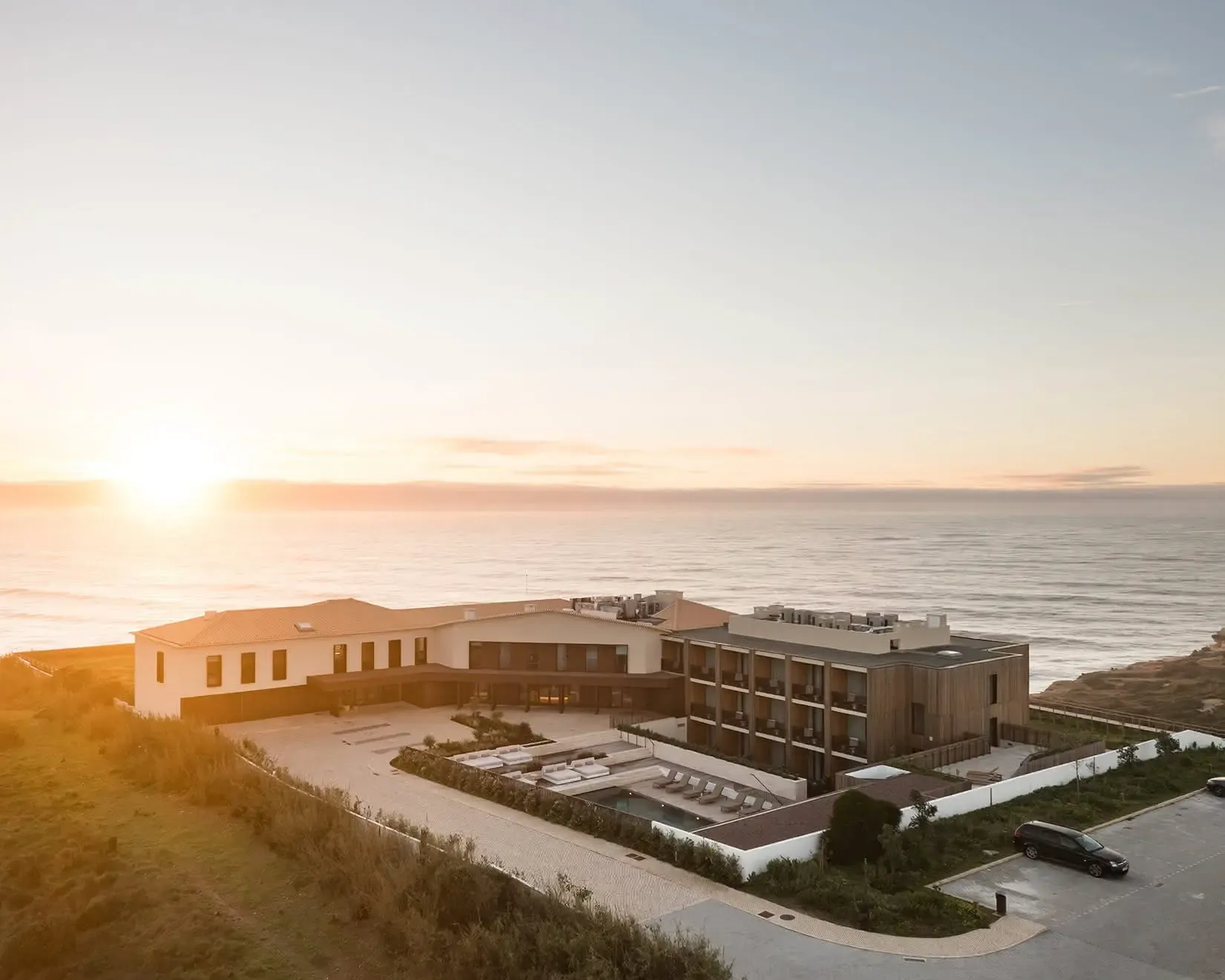
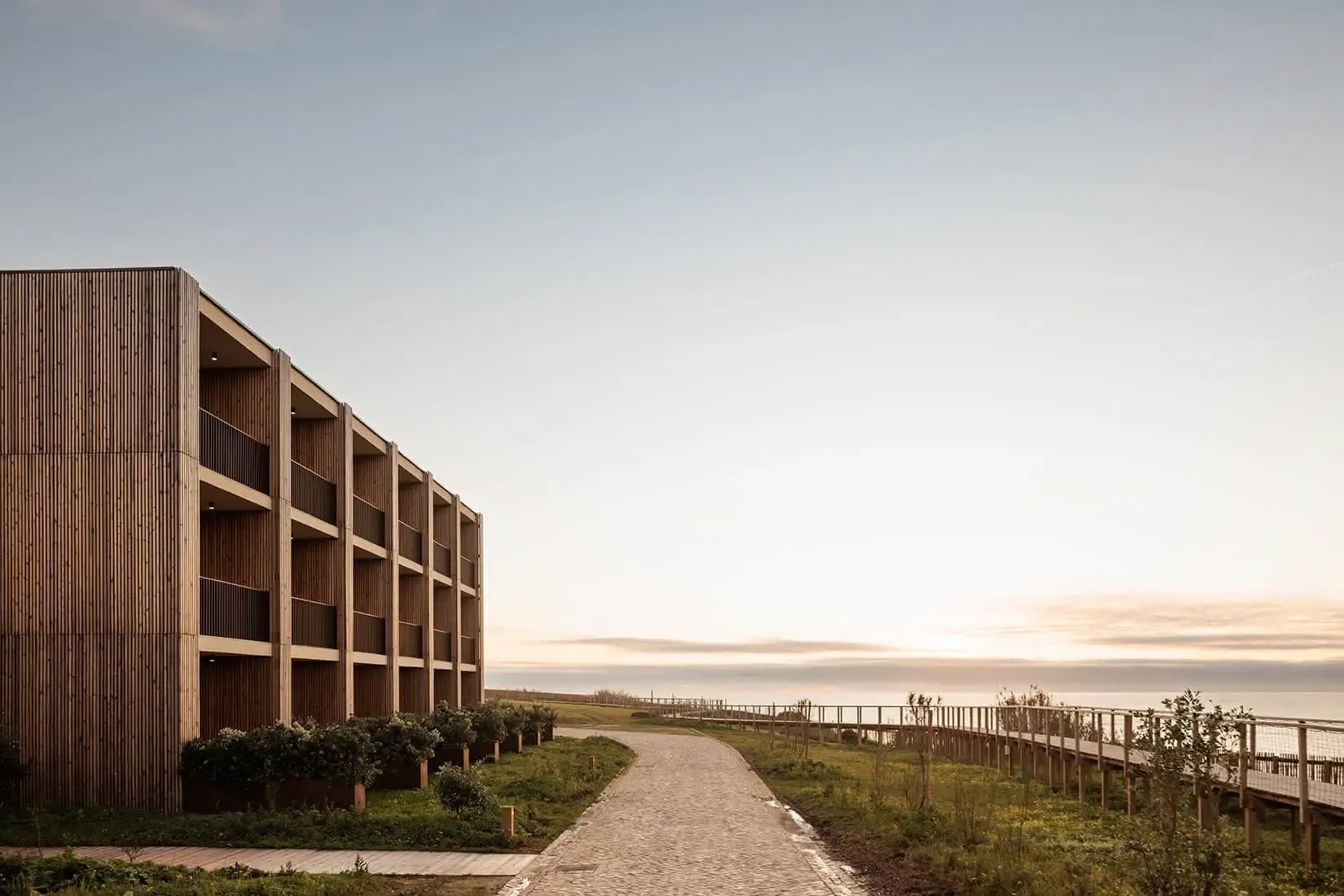
Detailing for this area, as well as all exterior areas, was closely coordinated with Topiaris, which developed the Landscape Architecture for the Hotel, based on the principles of connection and integration between building and surroundings that informed the whole design process.
Key features
Old meets new
A clear architectural distinction between the original traditional building and contemporary extensions, each with its own identity and materiality.
Cliff-edge sensitivity
Minimal intervention approach to comply with strict coastal building regulations while preserving the surrounding environment and ocean views.
Metallic box windows
Custom-designed protruding metallic window frames that became a defining feature, framing panoramic sea views from social and dining areas.
Pool & landscape integration
Partial demolition of an underground multipurpose room opened the pool area into a series of natural, interconnected levels with an internal garden and spa.
Sustainable materials
Wood cladding chosen to age gracefully with the coastal environment, paired with muted off-white thermal screed on traditional volumes.
Full-service delivery
Pedra Silva managed the entire process from concept design and licensing through to construction supervision and handover.
Results
- Successful renovation of a 3,745 m² hotel complex completed in 2022
- Nominated for ArchDaily 2024 Building of the Year Award
- Finalist at The Plan Awards 2023 in the Hospitality category
- Became one of Ericeira's top-rated boutique hotels on booking platforms
- Seamless integration of heritage construction with contemporary hospitality standards
Project team
- Architecture: Pedra Silva Architects (concept, licensing, execution)
- Interior design: Astet Studio, Barcelona
- Landscape architecture: Topiaris
- Photography: Francisco Nogueira
Working on a hospitality project?
From boutique hotels to heritage renovations, we handle concept design, permits, heritage coordination and construction supervision. Learn how we approach hospitality architecture.
Our Hospitality ApproachProject Context
Ericeira, a UNESCO World Surfing Reserve 45 minutes north of Lisbon, has emerged over the past decade as a destination of choice for a design-conscious international audience. The village combines a traditional Portuguese fishing culture with a growing reputation for boutique hospitality and creative tourism. Against this backdrop, the Aethos brand - a hospitality concept that blends surf lifestyle with thoughtful design - identified a previously vacant property as the site for its Portuguese debut.
The existing building, a compound of structures on a cliff edge overlooking the Atlantic, presented both opportunity and constraint. Portuguese coastal building regulations impose strict limits on intervention near cliff edges and protected shoreline zones. Any architectural response had to work within these limits while creating a hospitality experience compelling enough to attract international guests.
Boutique hotel renovation occupies a specific niche in Portuguese architecture: it requires fluency with both heritage fabric and contemporary hospitality programming, as well as a working knowledge of the licensing processes that govern buildings near sensitive coastal or historical sites. Pedra Silva Architects, with a practice focused on healthcare, hospitality and workplace, was commissioned to deliver the project end-to-end.
Design Approach
The design is organized around a deliberate architectural contrast: the original traditional vernacular volumes are preserved and read as a distinct historical layer, while a contemporary extension signals new program and use. This dialogue between old and new is expressed through materiality - off-white thermal screed on traditional volumes, wood cladding on contemporary additions - a palette chosen to age gracefully in the coastal environment.
Custom protruding metallic window frames became one of the most photographed features of the project. These frames serve a functional purpose - framing panoramic Atlantic views from social and dining areas - while forming a distinctive visual identity for the building on approach. The spatial organization follows a hospitality logic: circulation routes, guest arrival sequences, and communal social spaces are prioritized to support the guest journey at every scale.
Below the main volumes, a partial demolition of an underground multipurpose room opened the pool area into a sequence of natural, interconnected levels with an internal garden and spa. This move respects the cliff-edge constraints while delivering the outdoor amenity a contemporary surf resort requires. The landscape strategy, developed with Topiaris, draws on coastal Mediterranean planting to complete the site without competing with the architecture.
The project references the tradition of Portuguese coastal hospitality - direct, material, connected to landscape - while avoiding the nostalgic literalism that can make such references feel decorative rather than structural. The result reads as both contemporary and rooted.
Why This Project Matters
The Aethos Ericeira project is a reference point in Portuguese boutique hotel architecture and coastal hospitality renovation. It demonstrates how contemporary architects can respond to strict coastal regulations while delivering a hospitality product that competes on design and experience. For developers and hoteliers considering boutique hotel projects in Ericeira, Lisbon or the Portuguese coast, the project shows what end-to-end delivery by a studio experienced in hospitality architecture and local licensing can produce.
About the Architecture
Who designed the Aethos Ericeira Hotel?
The Aethos Ericeira Hotel was designed by Pedra Silva Architects, a Lisbon-based architecture studio specializing in hospitality design since 2003. The project was nominated for the Archdaily Building of the Year Award in 2024.
What is the architectural style of Aethos Ericeira?
The design blends contemporary Portuguese aesthetics with the Atlantic coastline landscape of Ericeira. Natural materials, local craftsmanship, and a connection between interior and exterior spaces define the architectural approach.
RELATED PROJECTS
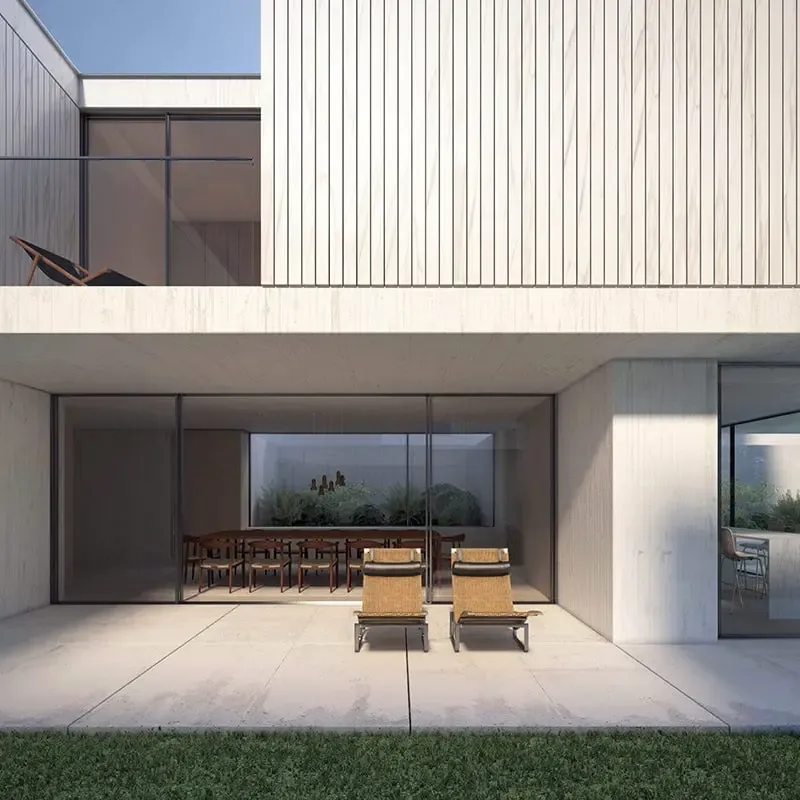
Courtyard House
Located in Lisbon, this proposal, currently under development, is the result of a private competition where the client requested a house built around the ideas of family life and connection to the outside.
View project: Courtyard House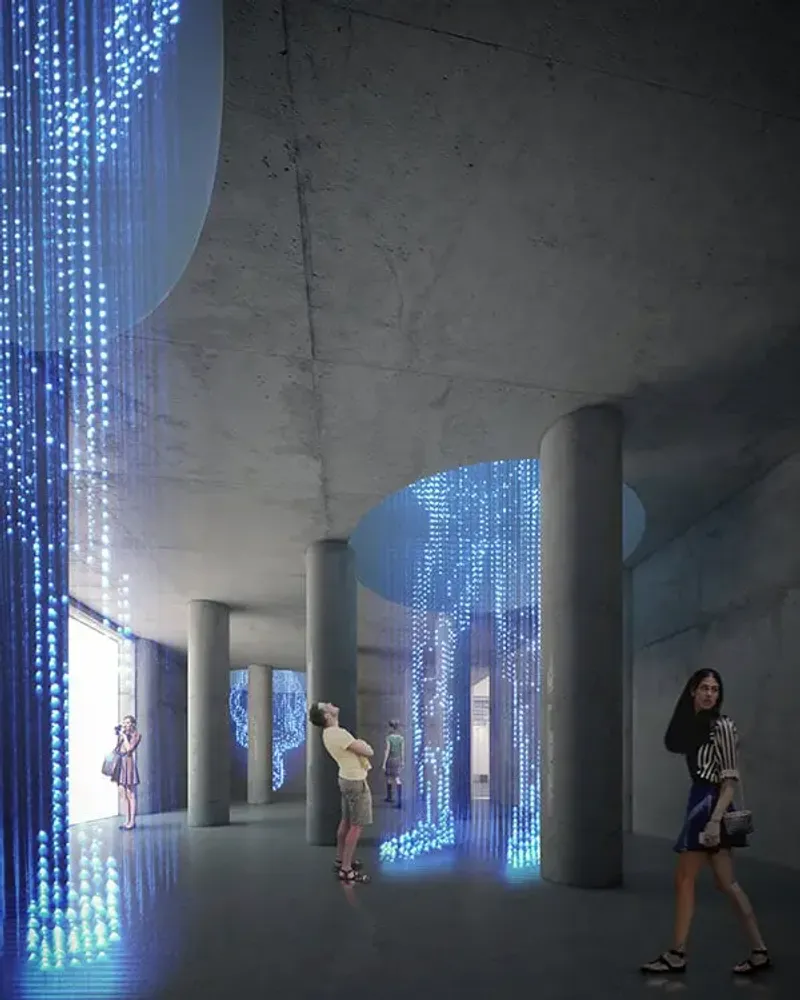
Zero Museum
Located in Santa Catarina da Fonte do Bispo – Tavira, in Algarve, and promoted by the Instituto Lusíada da Cultura, the Zer0 Museum project proposes the rehabilitation of part of the local agricultural cooperative’s installations into a museum and creative centre dedicated to the digital arts.
View project: Zero Museum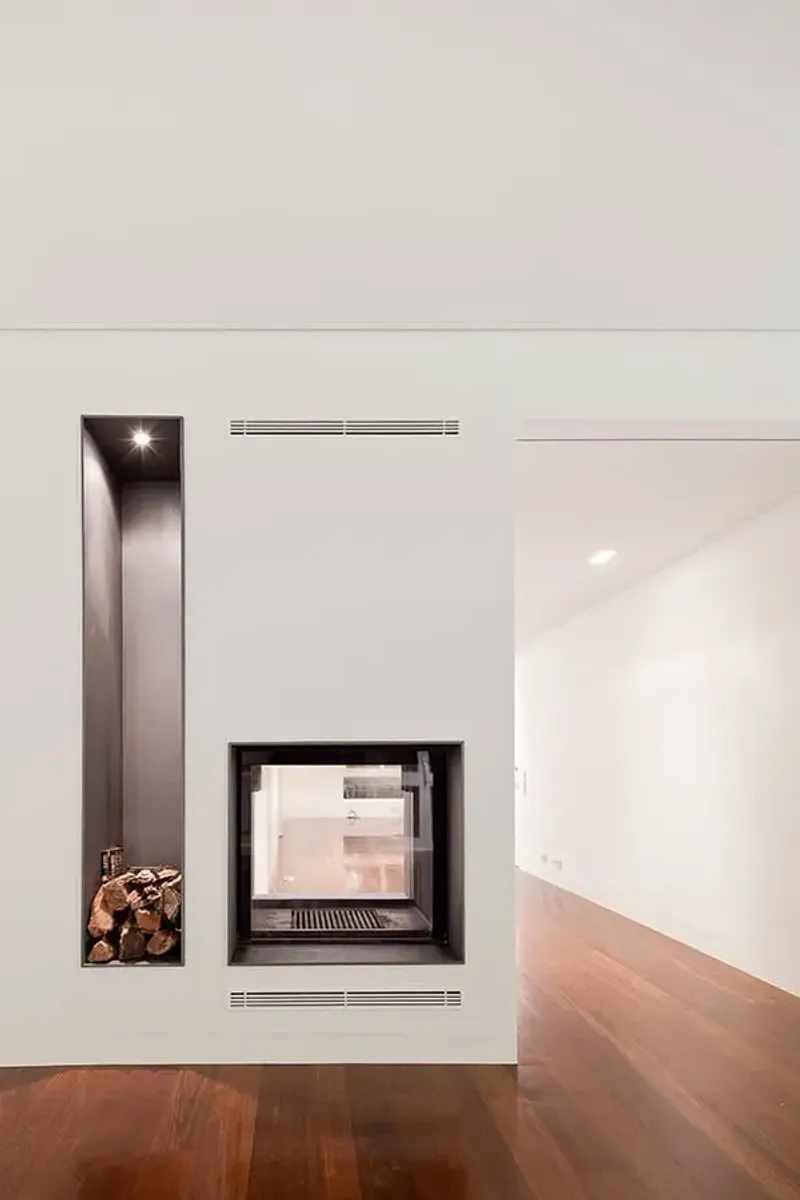
Palma Apartment
Located in Lisbon, the Palma Apartments main objective was the total restructuring of the existing space to create a new proposal for a living space that was more fluid and more adequate to our clients’ lifestyle.
View project: Palma ApartmentPlanning a hotel or hospitality project? Contact us